NEW JERSEY APPLESEED STATEMENT ON PROPOSED REDISTRICTING AMENDMENT

New Jersey Appleseed Public Interest Law Center today issued the following statement on the proposed constitutional amendment now pending before the Legislature (SCR152 and ACR205) that deals with how state legislative districts are drawn.

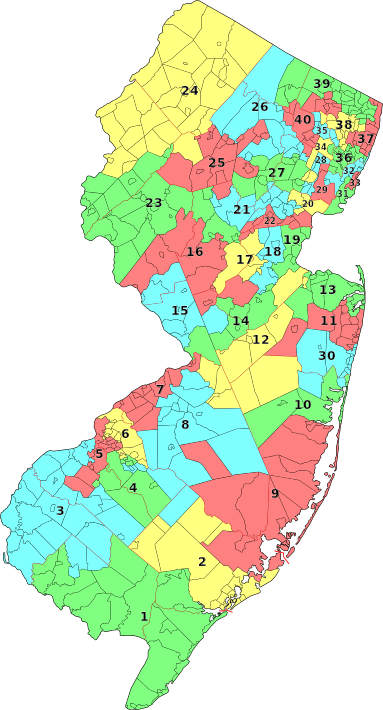
After a careful analysis of the pending proposals to alter the State’s reapportionment commission, New Jersey Appleseed has concluded that the proposal would be marginally more harmful than the status quo to the public interest, and to the interest of New Jersey voters. Nonetheless, for reasons more fully stated below, New Jersey Appleseed urges that the current proposal be rejected and that the Assembly and Senate should remand apportionment reform to an appropriate committee, for the establishment of a significantly new system that involves the creation of a citizen-based or nonpartisan commission.

The current method by which both redistricting and reapportionment are performed in New Jersey is at best characterized as minimally acceptable, but short of a just and fair system to which voters are entitled.

As it has operated to date, one political party insider from each of the two major political parties appoints other political party insiders to the reapportionment commission.  In the last reapportionment commission, in 2011, seven of the eleven members were sitting legislators.  Although the overwhelming presence of sitting legislators who have a self-interest in how districts are drawn is problematic, the current system has some protection against excesses.  Namely, because the maps proffered by each political party’s appointees must earn the support of a nonpartisan member appointed by the Chief Justice of the New Jersey Supreme Court, the map drafters are thereby deterred from offering outrageously gerrymandered maps as some other states have witnessed.  The results of this process in the past have been minimally acceptable, but they have still fallen far short of what is obtainable as a matter of fairness and justice.

New Jersey Appleseed does not find that greater diffusion in who chooses reapportionment commission members is intrinsically bad policy.   We do find it problematic, however, that the current proposal would result in the appointing authorities remaining, as is true under the current system, political insiders with a vested interest in the outcome of the map.

Nor do we find the mandate of a minimum number of competitive districts to be intrinsically flawed.  On the contrary, promoting competitive districts is a legitimate factor for the creation of responsible redistricting and reapportionment plans.  The problem with the proposed redistricting amendment is that, for the remaining districts – those not deemed to be competitive, there is no meaningful protection against them being “packed” and “cracked” in a way that would create a legislative map that is unjust – not just to political parties – but more importantly, to voters.

New Jersey can confidently look to other states that have created redistricting and reapportionment commissions that draw on experienced professionals, yet seek to minimize (though not eliminate) the role of self-interested legislators and political party insiders in the creation of maps.

While these other methods, sometimes called “citizen-based” or “nonpartisan” commissions, vary in their specifics, what they have in common is they rightly grant political parties and officeholders a full opportunity to be heard in regard to map-drawing.  However, they also ensure that legislators and legislative leadership do not serve as, nor do they appoint, a majority of the committee that actually draws the maps. Among others, California, Colorado, and Iowa all have responsible processes that minimize the influence of political party insiders, either as members of redistricting commissions, or with the responsibility of directly appointing members of these commissions.  These states’ processes provide useful templates from which New Jersey voters could obtain redistricting and reapportionment processes that have the public interest at heart, rather than the self-interest that is promoted by both the current system and the pending amendment proposals.

New Jersey Appleseed therefore urges that SCR152 and ACR205 be rejected, and the matter remanded to the appropriate Senate and Assembly Committee for a proposal that creates a citizen-based, rather than a party-based, redistricting and reapportionment system.

The above statement was prepared by New Jersey Appleseed Executive Director Renée Steinhagen and board member Flavio Komuves.
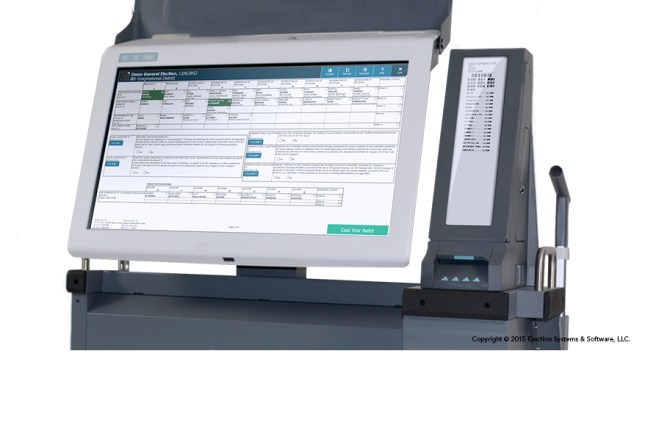
LET’S DO IT RIGHT ON NEW VOTING MACHINES

Two New Jersey towns at opposite ends of the state–Westfield, in Union County, and National Park, in Gloucester–tried out new voting machines on Election Day last week.

Both towns were part of a state pilot program paid for with federal HAVA (Help America Vote Act) Election Security Grants. New Jersey which received roughly $10 million of the $380 million national total, allocated $2.5 million for the pilot, plus another $250,000 for a related pilot to audit the votes cast on the new machines. Continue reading LET’S DO IT RIGHT ON NEW VOTING MACHINES

NEW JERSEY VOTES STILL HACKABLE

Election Day is upon us again and it is one that many of us view as crucial to saving our democracy, as we mobilize to flip control of the U.S. House of Representatives, and possibly the Senate too, so we can thwart the destructive policies of Donald Trump.

The day after last year’s election, I wrote a blog post about the vulnerability of New Jersey’s  voting machines. I am sorry to say that, although some small steps have been taken since then, our votes are still at risk, despite mounting evidence that they are not secure and that Russia hacked some states’ election systems in 2016.

New Jersey remains one of a handful of states where the validity of election results cannot be confirmed because the votes are recorded electronically and lack a verifiable paper trail.  Continue reading NEW JERSEY VOTES STILL HACKABLE

DIFFERENT RULINGS ON ACCESS TO POLICE RECORDINGS

People, like me, who believe in open government, were sorely disappointed last month when the state’s highest court, usually so protective of transparency, denied access to police dash-cam recordings under the Open Public Records Act (OPRA).

On August 13, 2018, a sharply divided New Jersey Supreme Court held, 4-3, in Paff v. Ocean County Prosecutor’s Office, that such recordings were not subject to disclosure under OPRA because they were not “required by law” to be made and constituted criminal investigatory records deemed confidential under OPRA.

Just 11 days later, however, a different New Jersey court determined that the same criminal investigatory exemption did not apply to police body cams. Continue reading DIFFERENT RULINGS ON ACCESS TO POLICE RECORDINGS

Historic Move by Baltimore to Safeguard its Water System

New Jersey is not the only place where communities are struggling to keep essential public water resources out of private hands.

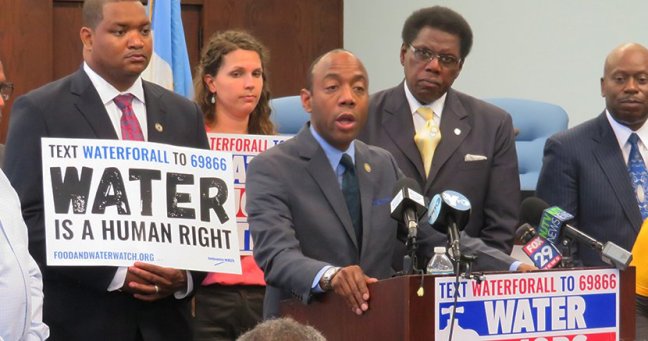
On August 6, the Baltimore City Council unanimously approved a resolution, Bill 18-0271, to amend the city charter to prohibit the sale or lease of its water system. The amendment would declare the “inalienability” of sewer and water-supply systems and exempt those systems, and their “operations and uses” from charter provisions that otherwise authorize the “grant of franchises or rights relating to the operation or use of public property.”

Continue reading Historic Move by Baltimore to Safeguard its Water System

TAX BILL’S LONG-TERM HARM OVERSHADOWS SALT IMPACT

Last year’s major federal tax bill –the so-called Tax Cut and Jobs Act— has left many in New Jersey very angry and concerned. And for good reason, even though other aspects of the bill will likely do far more serious and long-term damage, here and elsewhere.

Attention has focused on that part of the legislation with the most obvious detrimental impact on the state and its residents –a newly imposed $10,000 limit on the deduction for state and local taxes.

Continue reading TAX BILL’S LONG-TERM HARM OVERSHADOWS SALT IMPACT

DEMAND DNA TEST TO PREVENT POSSIBLE WRONGFUL EXECUTION

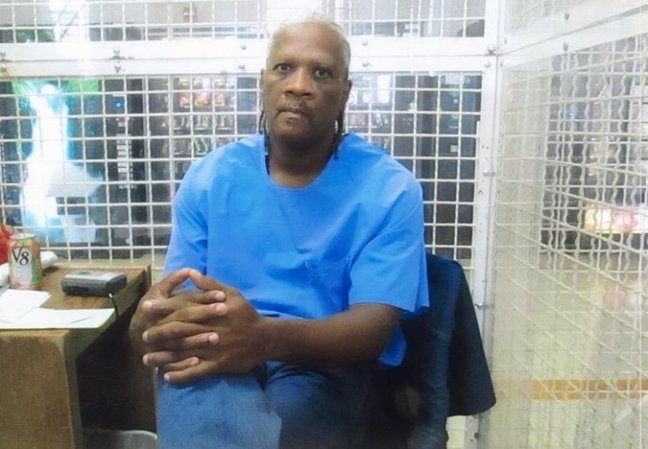
Until a few days ago, I had never heard of Kevin Cooper, who has been on California’s death row for more than 30 years, after being convicted of a quadruple homicide in 2003 that he apparently did not commit.

Not until I read Nicholas Kristof’s article in the May 20 New York Times, entitled “Was Kevin Cooper Framed for Murder?”

Kristof, whose opinion pieces typically concern international human rights abuses, lays out a convincing case that Cooper was, in fact,  framed.

Continue reading DEMAND DNA TEST TO PREVENT POSSIBLE WRONGFUL EXECUTION

New Study Assails Secrecy Surrounding Amazon Headquarters Bids

We all know that Newark is one of the 20 finalists in the running to be selected as the location for Amazon’s second headquarters and that, to lure the company, the state and city are offering up to $7 billion in tax credits and other incentives.

The reason we know that much is because New Jersey and Newark both passed legislation on the subject, exposing the process to public scrutiny.  But the bid Newark submitted to Amazon has not been disclosed. And though huge amounts of public resources are also involved in the bids of the most of the other 19 contenders, including  Chicago Dallas, Miami, and New York City, even less is known about most of those other bids.

The troubling secrecy surrounding the high stakes process is the subject of a study released on April 3 by Good Jobs First, a non-profit that focuses on corporate accountability. The title encapsulates the important issues at stake: “Public Auction, Private Dealings: Will Amazon’s HQ2 Veer to Secrecy Create a Missed Opportunity for Inclusive, Accountable Development?

Continue reading New Study Assails Secrecy Surrounding Amazon Headquarters Bids

LAWSUIT CHALLENGES IRONBOUND UPZONING

In a process that took years, spanned three mayors and was led by an urban planner who just won a MacArthur “genius” award based, in part, on those efforts, the City of Newark overhauled its zoning laws in 2015.

It was the first such comprehensive revision in more than 50 years and was widely praised not only for the substance of the new zoning,  which was based upon goals of environmental justice and accountable development, but for the open, participatory process by which it was adopted

Recently, in a move that would seem to undermine the well-thought out plan embraced just two years earlier and to contradict its participatory approach, Newark amended its zoning to increase the maximum building height in part of the Ironbound. And it allegedly did so without providing nearby residents the legally required notice.  Continue reading LAWSUIT CHALLENGES IRONBOUND UPZONING

STATE BACKS OFF EFFORT TO PRIVATIZE ATLANTIC CITY WATER SYSTEM

Atlantic City residents can stop worrying that the state, which took over their local government in the fall of 2016, is going to sell or lease their water system out from under them, at least in the near future.

In a statement made public on December 20, Jeffrey Chiesa, who was chosen by Governor Chris Christie to oversee the state takeover of the City, announced “the public can rest assured that the MUA [Municipal Utilities Authority] will not be privatized by the State.”

Continue reading STATE BACKS OFF EFFORT TO PRIVATIZE ATLANTIC CITY WATER SYSTEM