MORE VOTERS PURGED WHERE SUPREME COURT LIFTED RESTRICTIONS

When the United States Supreme Court weakened Voting Rights Act protections in 2013, many worried that it would open the floodgates to a new wave of voter suppression.

There was good reason to be concerned, as the Brennan Center for Justice has once again confirmed.

A report it released in July 2018 found that from 2014 to 2016—the two years following the 2013 decision in Shelby County v. Holder, 570 U.S. 529—almost 16 million people throughout the U.S. were removed from voting rolls.  That was almost four million more than the number who were removed from voter lists between 2006 and 2008, a roughly 33% increase that far exceeded the growth in total population (6%) and total registered voters (18%) over that same time frame.

The Brennan Center also found that the purging occurred at a higher rate in those areas, mainly in the South, that because of their history of discrimination had been subject to the protections abrogated by the Supreme Court in Shelby.  For the two election cycles between 2012 and 2016, those so-called preclearance jurisdictions, which were let off the hook by the Shelby ruling, had purge rates significantly higher than elsewhere. The Center calculated that if those jurisdictions had remained subject to the previous constraints, two million fewer voters would have been struck from the lists. Texas alone erased more than 363,000 voters in the first election cycle after Shelby.

Now, a follow-up report, made public on August 1, has found that the heightened rate of voter purges continued between 2016 and 2018. Continue reading MORE VOTERS PURGED WHERE SUPREME COURT LIFTED RESTRICTIONS
REFUSAL TO EXPAND MEDICAID KILLED 15,000+, NEW STUDY FINDS

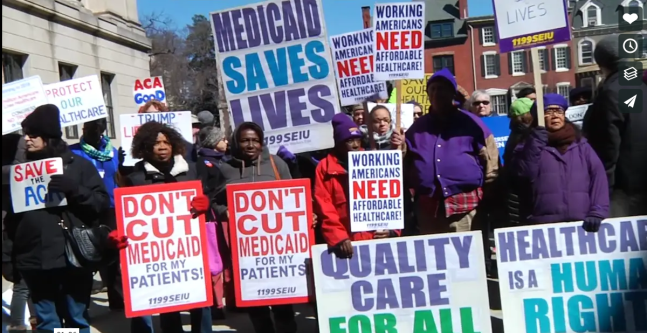
More than 20 U.S. state governments betrayed the health and well-being of their residents five years ago when they decided against expanding Medicaid pursuant to the Affordable Care Act (ACA) aka Obamacare. Now, thanks to a just published study, we have a good idea of the human cost: nearly 16,000 deaths over the four-year period from January 2014, when the expansion initially took effect, through the end of 2017.

The study, released on July 21, looked at what would have occurred if Medicaid had been expanded nationwide in 2014. Based on the differences in mortality between states that expanded and those that didn’t, the study found that 15,600 deaths in the non-expansion states would have been prevented if those states too had expanded Medicaid. Continue reading REFUSAL TO EXPAND MEDICAID KILLED 15,000+, NEW STUDY FINDS

Thank You for Your (Dis)Service–Corrupt Former Newark Water Agency Head Seeks Pension Payoff

It has been nearly six years since the quasi-public entity that was once responsible for the reservoirs that supply Newark’s drinking water shut down amid widespread corruption that sent at least six people to prison and helped drive the agency into bankruptcy.

Now, the person who once ran the agency and another high-level employee–both currently doing time in federal prison for their on-the-job misdeeds–are trying to collect pensions worth hundreds of thousands of dollars. And it looks like they might get their payday.

Continue reading Thank You for Your (Dis)Service–Corrupt Former Newark Water Agency Head Seeks Pension Payoff

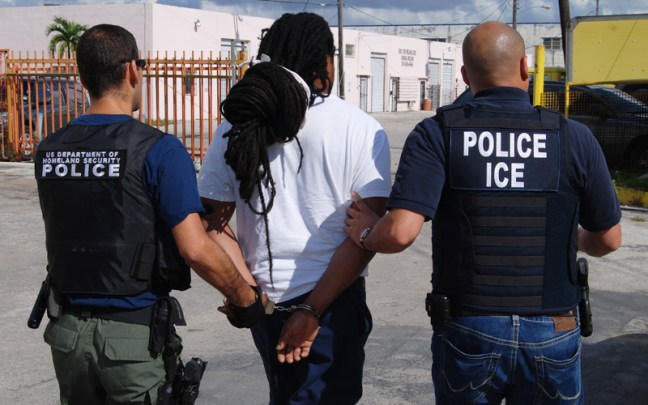
NJ COURTS PROVIDE ICE SHIELD

I was really happy to see last week that the New Jersey courts were taking concrete action to protect people from the harsh immigration policies of the Trump Administration.

Administrative Directive 07-19, released on May 23, states the view of the judiciary “that civil immigration enforcement activities should not take place in courthouses” and that “courthouses must be viewed by the public, all parties, victims, and witnesses as a neutral and safe forum to resolve disputes.” Continue reading NJ COURTS PROVIDE ICE SHIELD

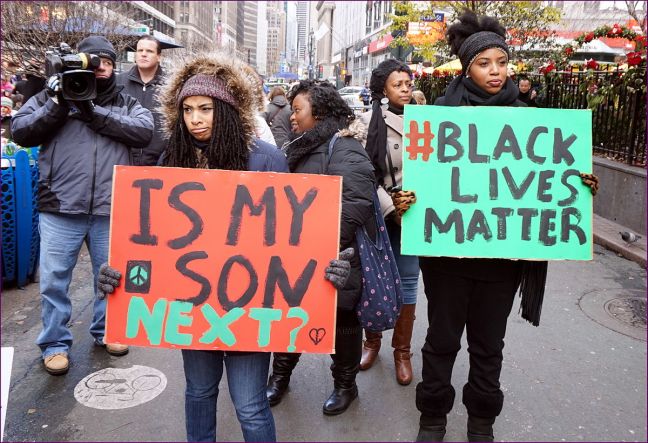
Police Use of Force Varies by Race and Region, with Fear a Major Factor

I don’t write much about criminal justice issues, but I would like to share this article entitled “How Fear Contributes to Cops’ Use of Deadly Force.”  It was written by Columbia University professors Rajiv Sethi and Brendan “Dan” O’Flaherty and posted today on The Marshall Project website.  (Dan O’Flaherty is my husband.)

Their data-driven article starts out with the troubling fact that police in the United States  kill civilians far more often than police in other countries, more than 1,000 each year, as contrasted with, for example, the combined 10 per year killed by British and German police.

Not surprisingly, there are striking racial disparities on who is at the receiving end of this police violence. For instance, black residents of Houston are four times more likely to face deadly force than white ones. In New York and Los Angeles, they are six to seven times more likely to die in police shootings. And in Chicago, they are 18 times more likely to be killed by police.

What is surprising is the regional differences that were found, which are so substantial that whites in Houston are more likely to be killed by police than blacks in New York City.

You can read the article here.

And if you find the topic of interest, read their book, published last month, called “Shadows of Doubt,” which looks at the impact of stereotypes and fear on policing and prosecution.

Yes, this is a shameless plug for my husband’s book but the book is a timely, deeply researched and thoughtful look at an important subject.

Image at top is from Wikipedia.

FEDERAL REPORT SLAMS DETAINEE CONDITIONS AT ESSEX JAIL

I was not going to write about the recent revelation that undocumented immigrants are being detained in Essex County in conditions that are, quite literally, sickening. Since the release of a report on February 13 that described serious health and safety lapses at the Essex County Correctional Facility, there have already been many news stories and editorials that have discussed and condemned the conditions it uncovered. There would seem to be little left to say on the subject.  Continue reading FEDERAL REPORT SLAMS DETAINEE CONDITIONS AT ESSEX JAIL

PROTECTIONS AGAINST FORFEITURE, FORECLOSURE, AND RETIREMENT SAVINGS GAP ADVANCE IN LEGISLATURE

Legislation that made it through various committees on February 7 would make New Jersey a better and fairer place, enhancing the financial security of retirees, helping people prevent the loss of their homes through foreclosure, and protecting against abusive civil asset forfeitures.

I have written about the Secure Choice Act before, which would establish a state-run retirement savings plan for people whose employers do not offer one. The legislation is in response to studies showing that most people do not save enough on their own for retirement, even though Social Security payments are not enough for seniors to live on—the so-called “retirement savings gap.” Continue reading PROTECTIONS AGAINST FORFEITURE, FORECLOSURE, AND RETIREMENT SAVINGS GAP ADVANCE IN LEGISLATURE

In Support of Early Voting

The following editorial appeard on the nj.com website on January 16, 2019:

Starting two weeks before the last election, residents of Essex County, where I live, got to vote early by going to the Turtle Back Zoo education building in West Orange and filling out a vote-by-mail ballot. You first had to complete an application that was processed on the spot. The procedure was time-consuming and somewhat confusing but interest was high and lines were long.

They called it early voting but it wasn’t really. Early voting as done in other states allows voters to cast their ballots up to 46 days before Election Day using voting machines at multiple polling places in each county. What Essex had was a work-around that utilized the vote-by-mail process, because state law does not authorize the real thing.

True early voting might come to New Jersey through a package of reforms that Governor Murphy is proposing, as discussed in a New York Times article on January 9. Continue reading In Support of Early Voting

VOTING MACHINE PILOT DEEMED SUCCESSFUL

Readers of this blog know that I am very concerned about the fact that New Jersey is one of only five states that continues to rely almost entirely on electronic voting machines that do not produce a paper record of the votes cast. That makes it difficult, if not impossible, to detect hacking and prevents a recount.

New voting machines that would create a verifiable paper trail had a test run in November, and it appears to have gone well, for the most part, according to an article in NJ Spotlight.

A portion of a $10 million voting security grant was used for a pilot program in Union, Gloucester, and Essex Counties in which new machines that create a paper record were used on Election Day. Post-election audits utilizing those paper records were also conducted.

In “Progress Seen in Test of Paper Trail Voting Machines That Allow Audit of Results,” Colleen O’Dea writes that this pilot and the accompanying audits were deemed a success.

This was the U.S. Senate race, in which incumbent Robert Menendez fended off a challenge from Republican Bob Hugin and several third-party candidates, that was verified using a risk-limiting audit.

Election audits involve counting a portion of the paper ballots to verify the accuracy of the outcome, where the votes have been cast and/or tabulated electronically. In a risk-limiting type of audit, the percentage of ballots is not a set number but varies depending on the number of votes cast and the margin in the particular race.

Christopher Deluzio, who focuses on election security as Counsel to the Brennan Center’s Democracy Program, called risk-limiting audits the gold standard and described how states are starting to adopt that approach in a July 25, 2018 article, entitled “A Smart and Effective Way to Safeguard Elections.”

New Jersey has a law requiring election audits that was never implemented because 20 of our 21 counties use voting machines that do not produce a paper trail. Pending legislation, A-3991/S-2633, would repeal the auditing law and replace it with a requirement for risk-limiting audits, to be conducted once counties switch to machines that produce the necessary paper record of the votes cast.

.

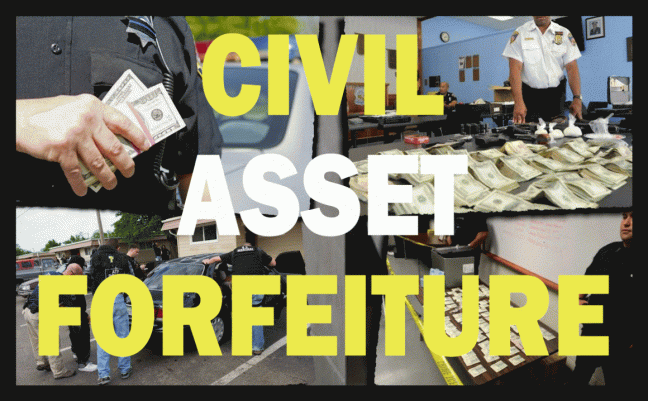
ACLU REPORT HIGHLIGHTS FORFEITURE FLAWS

A new report from the New Jersey affiliate of the American Civil Liberties Union takes a good, hard look at civil asset forfeiture and concludes that it is prone to widespread abuse and disproportionately used against people of color.

Civil asset forfeiture, also known as civil forfeiture, and sometimes disparagingly referred to as “policing for profit” is a legal process by which law enforcement officers take people’s property away from them on mere suspicion of a crime without necessarily arresting them or bringing charges. The statutes that govern it are N.J.S.A. 2C:64-1 et seq.

The textbook case of civil forfeiture is the seizure of illegal narcotics from suspected drug dealers, as well as cash believed to have been used in or earned from narcotics transactions.

But forfeiture can involve a wide range of assets, many of which are far more innocuous. Cars, boats, houses, jewelry, art, electronics – just about anything can be seized. The report lists baseball cards, a bicycle, an iPod, shoes and laptops, among other items. Continue reading ACLU REPORT HIGHLIGHTS FORFEITURE FLAWS