STRIKE SAID TO TEST FUTURE OF UNIONS

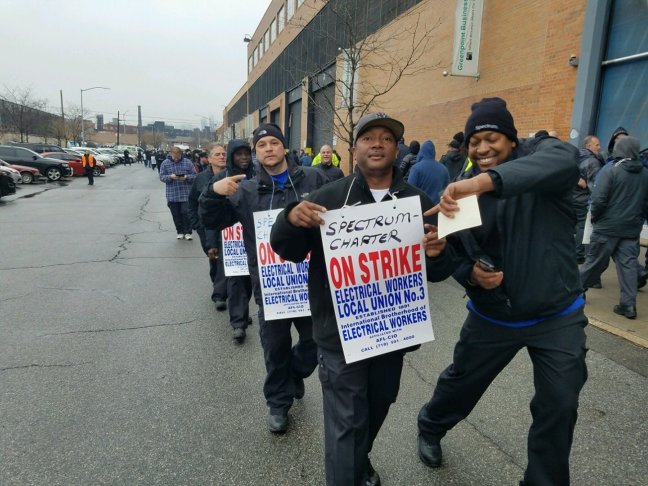
When 40,000 Verizon workers—including about 4,600 in New Jersey—went on strike last year, I read a lot of news stories about it and on my trips to New York City, I saw people walking the picket line. The strike ended after almost two months, with both sides claiming victory and it appeared the workers had come out ahead—winning pension increases, ratification bonuses, new call center jobs and other concessions.

Continue reading STRIKE SAID TO TEST FUTURE OF UNIONS

GETTING A SWAMP MALL INSTEAD OF A COMMUTER TUNNEL

Many New Jersey commuters are experiencing a “summer of hell” marked by cancelled and delayed train service due to the deteriorating rail link to New York City. They might want to know why the state has not been able to get its act together to build a badly needed new train tunnel, even while it has been pushing relentlessly to build a mall in the Meadowlands.

Continue reading GETTING A SWAMP MALL INSTEAD OF A COMMUTER TUNNEL

RESOUNDING WIN FOR GOVERNMENT TRANSPARENCY

A unanimous decision by the New Jersey Supreme Court has overturned a lower court holding that would have allowed the government to deny access to vast swathes of information kept on its computers. Click here to read the decision.

The lower court had interpreted the state Open Public Records Act, aka OPRA, as mandating public access only to discrete records and not to information per se.

Continue reading RESOUNDING WIN FOR GOVERNMENT TRANSPARENCY

FIRST GORSUCH OPINION OPENS DOOR TO DEBT COLLECTION ABUSES

Justice Neil Gorsuch, the newest addition to the U.S. Supreme Court, recently authored his first opinion and it is one likely to have negative repercussions for large numbers of people who find themselves unable to pay their bills.

Henson v. Santander Consumer USA, decided on June 12, concerns the Fair Debt Collection Practices Act or FDCPA, a federal law that is meant to protect against abusive, unfair, and deceptive practices in the collection of consumer debt– debt incurred primarily for personal, family, or household purposes.

Continue reading FIRST GORSUCH OPINION OPENS DOOR TO DEBT COLLECTION ABUSES

A Healthcare Coalition

By Renee Steinhagen

.

NJ Appleseed’s Role in the New Jersey and Greater Newark Coalitions

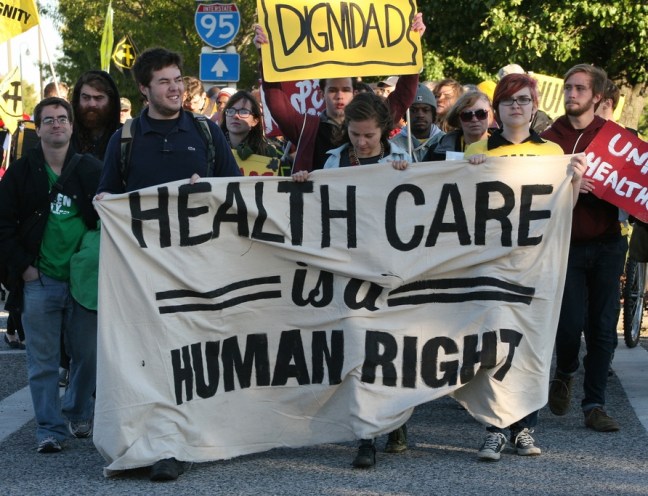
Since our inception, NJ Appleseed has focused its efforts on health care issues, providing a legal voice to communities and organizations seeking to establish health care as a social right by preserving hospitals as charitable community assets, improving access to quality, affordable health care services, and diminishing racial disparities in the health status of Newark residents. Our work in this area can be characterized as three distinct projects: The Community Health Assets Protection Project (representing the community in administrative and court procedures to ensure that hospital boards satisfy their fiduciary duties to the public when seeking to merge or sell their charitable health assets to a for-profit entity or another nonprofit with a different mission); a Consumer Advocacy Project and a Transforming Healthcare Delivery Project.

Under the rubric of our Consumer Advocacy Project, NJ Appleseed has participated on the leadership team of the NJ Healthcare Coalition since its founding in 2006. As the only legal organization participating in the Coalition (Legal Services of NJ informally participates but is not a member), NJ Appleseed services the Coalition, its individual members and the public generally with respect to legal policy issues, including drafting and analyzing legislation, preparing regulatory comments, and preparing white papers and consumer manuals with respect to legal rights, such as the right to appeal insurance denials of benefits. We are now considering whether to convert the New Jersey Sentinel website (which was product of a joint project between NJ Appleseed and Seton Hall Law School, funded by RWJ Foundation to evaluate essential benefits) into a comprehensive consumer health care website that provides information directly to New Jersey consumers on how to navigate the insurance, health care (providers), and public health systems in the State, and perhaps the website could deal with occupational health and safety as well as environmental health issues.

Since the closure of St. James and Columbus hospitals in Newark, NJ Appleseed’s Executive Director has been a board member of the Greater Newark Healthcare Coalition (consisting of a wide array of providers, including hospitals, physicians, federally qualified health centers, nurses, etc.), which was established as the Hospital CEO Working Group as a result of those closures. The Coalition is a planning organization that oversees various projects that seek to transform the healthcare system so it is more equitable, socially and racially just, and effective in improving the health status of Newark residents. NJ Appleseed is the Chair of the Legal and Advocacy Subcommittee, which is the one Board committee that draws mainly from persons who are not represented on the board. As one of three non providers on the board –- representatives from NJIT and Seton Hall Law School are the other two –- NJ Appleseed is trying to bring the consumer perspective to the Board’s decision making, and to encourage community participation in the organization’s activities.

We are seeking resources to support our activities in these two coalitions.

Advisors

Same Day Registration

By Renee Steinhagen

Since our inception, NJ Appleseed has focused its efforts on legal electoral reform issues. Most recently, we have characterized our efforts in this area as “Empowering Democracy,” including two distinct projects: Enabling the Franchise (improving access to and encouraging participation in elections, campaign finance reform initiatives and promoting alternative forms of voting) and Facilitating Initiative and Referendum. For the past four to five years, NJ Appleseed served as co-counsel with the Rutgers Clinic (representing the Rutgers Student Union Association, NJ Citizen Action, the Latino Action Alliance and several individual voters) in a constitutional challenge to New Jersey’s advanced election registration system. The theory behind the case was that in light of the implementation of the State’s electronic Statewide Voter Registration System (with its capacity to verify voters identifying information within 24 hours) and its employment of provisional ballot affirmation statements, which are effective registration forms, the State had no valid interest justifying the burden imposed by such requirement on an individual’s right to vote under the State Constitution. The litigation went to the Appellate Division twice, before our Petition for Certification before the NJ Supreme Court was denied.

I would like to convert our litigation theories into several mini-white papers that would support and frame a legislative campaign to secure Same-Day Registration through our current provisional ballot system. Such papers would focus on (1) the burden imposed on voters by advanced registration, in particular low-income voters; (2)the administration of same-day registration schemes in other States; (3) the logistics of voting in NJ including the challenge system, the mailing of ballots, the counting of mail and provisional ballots, and other administrative features; and (4) the capacity of the current SVR system to detect in person fraud or double voting.

NJ Appleseed would draft a proposed bill amending the current election code and generate a grass-roots campaign, with its partners, across the State to generate public support for permitting Same-Day registration by employing our current provisional ballot system. Depending on the outcome of the November 2017 election, I anticipate that we could get this change enacted by the middle of 2018 if Democrats prevail in the Legislature and Governor’s office.

.

Partner organizations

Advisors

COURT NIXES RULE LIMITING UNEMPLOYMENT BENEFITS

A two-year-old rule that makes it harder to collect unemployment benefits in New Jersey has been struck down in court.

On May 1, a three-judge Appellate Division panel invalidated N.J.A.C. 12:17-2.1 as arbitrary and capricious, finding it illogical and confusing and calling it a “linguistic morass, one that cannot be readily or sensibly understood and applied.”

Continue reading COURT NIXES RULE LIMITING UNEMPLOYMENT BENEFITS

NEW HOPE FOR anti-SLAPP BILL

The New Jersey Assembly has overwhelmingly passed a bill that would protect people who speak out on public issues from baseless lawsuits meant to intimidate them into silence.

The legislation, A-603, targets SLAPP suits, the shorthand for what are known as Strategic Lawsuits Against Public Participation.

SLAPP suits, which often occur in the context of opposition to real estate development projects, pitting people from the community against a wealthy corporation, are meant to deter opposition because of the high cost of defending them, even if they are eventually thrown out for lack merit or withdrawn once the developer or other SLAPP plaintiff has succeeded in quelling critics.

Continue reading NEW HOPE FOR anti-SLAPP BILL

CHIPPING AWAY AT OPRA

A bill moving through the New Jersey Legislature threatens to undermine the Open Public Records Act, known as OPRA.

OPRA’s defining characteristic and its great strength are its presumption of public access to all government records and the information they contain, except for 24 expressly exempted categories, and the ability to recover legal fees when access is wrongfully denied. The exemptions encompass such areas as personnel records; advisory, consultative or deliberative material; criminal investigation and victims’ records; trade secrets; security measures and procedures whose disclosure would jeopardize safety; and records subject to attorney -client privilege. A specific “Personal Identifying Information” exemption already exists for four kinds of crucial identifiers: Social Security numbers, credit card numbers, drivers’ license numbers and unlisted phone numbers.

Continue reading CHIPPING AWAY AT OPRA

NJ JUSTICES TO DECIDE MAJOR OPEN RECORDS CASE

What is probably the most significant case in years affecting public access to government records and information was argued before the New Jersey Supreme Court on Feb. 28.

Unless the lower court decision Paff v. Galloway is reversed, members of the public will have diminished access under New Jersey’s Open Public Records Act (OPRA) to the vast quantities of information stored electronically in government computers.

The case is viewed as so critical to the public right of access to electronic data that it has drawn the participation of an international data rights group, the Electronic Frontier Foundation (EFF), whose mission is defending civil liberties in the digital realm.

Paff--Twitter

At issue is an OPRA request for all emails sent during a two week period in June 2013 by the Township Clerk and Chief of Police of Galloway Township in Atlantic County. The requestor, John Paff, a longtime advocate for government transparency, did not seek the emails in their entirety but only a log or list of the sender, recipient, date, and subject for each of them.

Continue reading NJ JUSTICES TO DECIDE MAJOR OPEN RECORDS CASE