Public Policy Forum

Federal Courts Limit Hiring Protections for Older Workers

As a former employment lawyer and a Baby Boomer, I am dismayed that two recent federal appeals courts, one within the last month, have held that the Age Discrimination in Employment Act does not protect older workers looking for jobs from disparate impact age discrimination, only those who already have jobs.

We are talking about the use of hiring criteria that might not expressly mention age but disfavor job candidates who have too much experience or who graduated too many years ago—factors which correlate closely with age. Continue reading Federal Courts Limit Hiring Protections for Older Workers

PROTECTIONS AGAINST FORFEITURE, FORECLOSURE, AND RETIREMENT SAVINGS GAP ADVANCE IN LEGISLATURE

Legislation that made it through various committees on February 7 would make New Jersey a better and fairer place, enhancing the financial security of retirees, helping people prevent the loss of their homes through foreclosure, and protecting against abusive civil asset forfeitures.

I have written about the Secure Choice Act before, which would establish a state-run retirement savings plan for people whose employers do not offer one. The legislation is in response to studies showing that most people do not save enough on their own for retirement, even though Social Security payments are not enough for seniors to live on—the so-called “retirement savings gap.” Continue reading PROTECTIONS AGAINST FORFEITURE, FORECLOSURE, AND RETIREMENT SAVINGS GAP ADVANCE IN LEGISLATURE

In Support of Early Voting

The following editorial appeard on the nj.com website on January 16, 2019:

Starting two weeks before the last election, residents of Essex County, where I live, got to vote early by going to the Turtle Back Zoo education building in West Orange and filling out a vote-by-mail ballot. You first had to complete an application that was processed on the spot. The procedure was time-consuming and somewhat confusing but interest was high and lines were long.

They called it early voting but it wasn’t really. Early voting as done in other states allows voters to cast their ballots up to 46 days before Election Day using voting machines at multiple polling places in each county. What Essex had was a work-around that utilized the vote-by-mail process, because state law does not authorize the real thing.

True early voting might come to New Jersey through a package of reforms that Governor Murphy is proposing, as discussed in a New York Times article on January 9. Continue reading In Support of Early Voting

VOTING MACHINE PILOT DEEMED SUCCESSFUL

Readers of this blog know that I am very concerned about the fact that New Jersey is one of only five states that continues to rely almost entirely on electronic voting machines that do not produce a paper record of the votes cast. That makes it difficult, if not impossible, to detect hacking and prevents a recount.

New voting machines that would create a verifiable paper trail had a test run in November, and it appears to have gone well, for the most part, according to an article in NJ Spotlight.

A portion of a $10 million voting security grant was used for a pilot program in Union, Gloucester, and Essex Counties in which new machines that create a paper record were used on Election Day. Post-election audits utilizing those paper records were also conducted.

In “Progress Seen in Test of Paper Trail Voting Machines That Allow Audit of Results,” Colleen O’Dea writes that this pilot and the accompanying audits were deemed a success.

This was the U.S. Senate race, in which incumbent Robert Menendez fended off a challenge from Republican Bob Hugin and several third-party candidates, that was verified using a risk-limiting audit.

Election audits involve counting a portion of the paper ballots to verify the accuracy of the outcome, where the votes have been cast and/or tabulated electronically. In a risk-limiting type of audit, the percentage of ballots is not a set number but varies depending on the number of votes cast and the margin in the particular race.

Christopher Deluzio, who focuses on election security as Counsel to the Brennan Center’s Democracy Program, called risk-limiting audits the gold standard and described how states are starting to adopt that approach in a July 25, 2018 article, entitled “A Smart and Effective Way to Safeguard Elections.”

New Jersey has a law requiring election audits that was never implemented because 20 of our 21 counties use voting machines that do not produce a paper trail. Pending legislation, A-3991/S-2633, would repeal the auditing law and replace it with a requirement for risk-limiting audits, to be conducted once counties switch to machines that produce the necessary paper record of the votes cast.

.

5 Reasons Why MX-3 Should Not Pass

Over the past year and a half, the Baraka administration has pushed for an amendment to the Newark Zoning and Land Use Regulations (NZLUR) primarily to create a new MX-3 zone in the Ironbound neighborhood, directly adjacent to Newark Penn Station. This new zone calls for taller, denser buildings, most of which would require compliance with the nascent Inclusionary Zoning Ordinance. That means most large buildings in the new zone would need to set aside a minimum of 20 percent of the total number of residential units for Affordable Housing, as defined by the State of New Jersey.

On the surface, this is a noble idea and can serve to benefit the City of Newark for decades to come. Considering that a large portion of the  land in question is currently underutilized as surface parking, vacant, or small scale industrial uses, it is clear something needs to change in this area. Penn Station is the busiest train station in New Jersey, after all, and Newark deserves a grade A transit-oriented neighborhood.  Unfortunately, the current draft of the ordinance is short-sighted and riddled with errors and vague language. It simply is not ready to become law. Below are five reasons why the ordinance should not pass as it exists today.

1. MX-3 will make housing less affordable in the Ironbound

Housing markets generally work on a regional scale; think NYC metro area. The more housing you build, the cheaper overall housing becomes throughout the region. However, latent demand is so intense in the New York City metro area that simple supply and demand economics is irrelevant at the neighborhood scale.  Housing has been built denser and faster than anytime in history resulting in higher and higher housing prices immediately adjacent to new development. Several studies have confirmed that this often results in displacement of nearby residents. We only need to look at Jersey City or Hoboken to see this playing out. Newark and the Ironbound will succumb to the same market forces over time if there is no attempt to build affordable housing.

It’s no question that Newark needs to build more housing next to Penn Station where there is high demand, but this ordinance does nothing to preserve affordability in the neighborhood. The city’s Inclusionary Zoning Ordinance requires affordable housing in the future MX-3 zone, but with a large loophole that allows developers to pay a nominal fee for each unit not built on site. If given the choice, a for-profit developer will always choose this option because the fee associated with each unit is much less than the cost of actually constructing a unit. The City has already shown a willingness to accept such payments in lieu thus far. It remains to be seen if on-site construction will be enforced bin the most critical areas (i.e. next to a busy train station).

All of this means that it’s likely no affordable housing will be built in the MX-3 zone where it is most critical for an inclusive city. This in turn will result in higher property taxes and higher rents for neighborhood residents, as has happened elsewhere in Northern New Jersey.

To fix this, the Council can require as a condition of approval for large buildings that affordable housing must be built on site. This is called a “Conditional Use  Standard” which is applied to any “use” listed as ‘C’ for Conditional in any zone. The thinking is, in exchange for building higher or denser, developers should be required to provide affordable housing. We would suggest all High Rise Residential buildings be listed with a ‘C’ and include specific provisions for the MX-3 zone in the Conditional Use Standards (Chapter 6).


2. MX-3 Encourages overdevelopment without infrastructure improvements

The area slated for the MX-3 zone already suffers from routine flooding, sewage backup, and poor air quality. This is all true while a large portion of the land remains unbuilt. Once new buildings are developed, all of these problems will be worse. There will be less open land to absorb rainwater, more demand on the public sewer and water systems, and less vegetation to absorb air pollutants.

To the City’s credit, the draft MX-3 ordinance does include some “sustainability standards” for all new buildings in the zone, but this does not address the most critical impacts of overdevelopment on Newark’s combined storm sewer system. The City should introduce a companion ordinance that exacts impact fees or requires private investment in the public infrastructure to mitigate the worst impacts of these future developments. The City has indicated it may be willing to do so, but so far this has been unaddressed.


3. Text is poorly written and susceptible to abuse

Much of the language in the draft ordinance is unnecessarily complex and confusing. This will likely result in different interpretations of key provisions leading to unintentional results. For example, it is unclear whether certain tall buildings, such as hotels or office buildings, would be considered the “Detached Commercial” building type or the overly verbose “Ground floor commercial, including retail, office or service use with commercial or residential above” building type. It’s important to note that there are no restrictions on building height for “Detached Commercial” buildings, meaning towers exceeding 20 stories could feasibly be built in this area. This is contrary to the City’s statements that all buildings within the zone are limited to 12 stories (the text now reads “145 feet”). At the very least, this discrepancy should be clarified.

Other provisions are not sufficiently defined. For example, the open space requirement under the “sustainability standards for MX-3” is too flexible. An owner could conceivably provide a covered driveway or paved area and comply with this definition. We have seen such a space on an application that was previously approved. Surely this is not the intention of this requirement. The City needs to spend more time on this ordinance to ensure that text cannot be misinterpreted.

4. The process is opaque, rushed, and non-democratic

The original MX-3 ordinance process in 2017 was fraught with poor outreach and weak community engagement, if any. It took just over 3 months to introduce and pass the ordinance after much community resistance and only one, heated, community meeting. Proper notice wasn’t given to residents The quick turnaround resulted in much confusion over which version of the legislation was being brought to a vote, and some councilmembers and planning board members seemed unfamiliar with the provisions set within. Eventually, that version of the ordinance was struck down in court, in part due to the improper response by the City.

When the City of Newark restarted the process in late November of 2018, it did so with the expectation that the ordinance would pass in less than one month, before an artificial deadline at the end of 2018. The deadline was later extend by about one week. That being said, the administration made an effort to host several public meetings to help inform the community about what was coming. Those meetings produced substantive feedback about the organization of the text, specific planning requirements for different building types, and a concern for public infrastructure.

Since receiving comments from community stakeholders, virtually none of it has been incorporated into the draft text. Instead, the new draft has eliminated or reduced required setbacks, removed a 12-story limit, and continues to permit buildings in excess of 12 stories – this is all contrary to the public feedback. Through and through, the remaining portion of the ordinance is almost exactly the same despite the deficiencies that have been pointed out during the lawsuit. It begs the question, who is this benefitting and why has the process been so divisive? The community clearly wants changes to the draft, and they are willing to compromise – several people suggested height limits of 10 stories, well above what is existing and greater than what is currently allowed. Still, the City hasn’t budged and they haven’t given clear reasons as to why such a zone change is needed. Such a large change to the zoning requires more transparent engagement, more time, and better planning. Without those things, we’re left with subpar legislation that will do more harm than good and likely benefit only a privileged few.


5. Sets a bad precedent

This zoning amendment represents the first major adjust to Newark’s brand new zoning ordinance. Passed in 2015 and based on a Master Plan from 2012, the current ordinance is less than 4 years old. That ordinance is derived from a thorough public process which sets requirements for all zones throughout Newark, including the R-5 / future MX-3 zone. By amending the ordinance so soon with little community support, and little explanation, the City is setting a precedent for all future zoning changes. That means any new administration can simply change the text as it sees fit without regard to those who will be most impacted by such changes.

At the very least, the administration should incorporate into the text some of the very specific and relevant comments given by the public. Perhaps this will restore some good will and show future administrations that you need the support of the community being affected.

aerial view of the proposed mx-3 zone

ACLU REPORT HIGHLIGHTS FORFEITURE FLAWS

A new report from the New Jersey affiliate of the American Civil Liberties Union takes a good, hard look at civil asset forfeiture and concludes that it is prone to widespread abuse and disproportionately used against people of color.

Civil asset forfeiture, also known as civil forfeiture, and sometimes disparagingly referred to as “policing for profit” is a legal process by which law enforcement officers take people’s property away from them on mere suspicion of a crime without necessarily arresting them or bringing charges. The statutes that govern it are N.J.S.A. 2C:64-1 et seq.

The textbook case of civil forfeiture is the seizure of illegal narcotics from suspected drug dealers, as well as cash believed to have been used in or earned from narcotics transactions.

But forfeiture can involve a wide range of assets, many of which are far more innocuous. Cars, boats, houses, jewelry, art, electronics – just about anything can be seized. The report lists baseball cards, a bicycle, an iPod, shoes and laptops, among other items. Continue reading ACLU REPORT HIGHLIGHTS FORFEITURE FLAWS

NEW JERSEY APPLESEED STATEMENT ON PROPOSED REDISTRICTING AMENDMENT

New Jersey Appleseed Public Interest Law Center today issued the following statement on the proposed constitutional amendment now pending before the Legislature (SCR152 and ACR205) that deals with how state legislative districts are drawn.

After a careful analysis of the pending proposals to alter the State’s reapportionment commission, New Jersey Appleseed has concluded that the proposal would be marginally more harmful than the status quo to the public interest, and to the interest of New Jersey voters. Nonetheless, for reasons more fully stated below, New Jersey Appleseed urges that the current proposal be rejected and that the Assembly and Senate should remand apportionment reform to an appropriate committee, for the establishment of a significantly new system that involves the creation of a citizen-based or nonpartisan commission.

The current method by which both redistricting and reapportionment are performed in New Jersey is at best characterized as minimally acceptable, but short of a just and fair system to which voters are entitled.

As it has operated to date, one political party insider from each of the two major political parties appoints other political party insiders to the reapportionment commission.  In the last reapportionment commission, in 2011, seven of the eleven members were sitting legislators.  Although the overwhelming presence of sitting legislators who have a self-interest in how districts are drawn is problematic, the current system has some protection against excesses.  Namely, because the maps proffered by each political party’s appointees must earn the support of a nonpartisan member appointed by the Chief Justice of the New Jersey Supreme Court, the map drafters are thereby deterred from offering outrageously gerrymandered maps as some other states have witnessed.  The results of this process in the past have been minimally acceptable, but they have still fallen far short of what is obtainable as a matter of fairness and justice.

New Jersey Appleseed does not find that greater diffusion in who chooses reapportionment commission members is intrinsically bad policy.   We do find it problematic, however, that the current proposal would result in the appointing authorities remaining, as is true under the current system, political insiders with a vested interest in the outcome of the map.

Nor do we find the mandate of a minimum number of competitive districts to be intrinsically flawed.  On the contrary, promoting competitive districts is a legitimate factor for the creation of responsible redistricting and reapportionment plans.  The problem with the proposed redistricting amendment is that, for the remaining districts – those not deemed to be competitive, there is no meaningful protection against them being “packed” and “cracked” in a way that would create a legislative map that is unjust – not just to political parties – but more importantly, to voters.

New Jersey can confidently look to other states that have created redistricting and reapportionment commissions that draw on experienced professionals, yet seek to minimize (though not eliminate) the role of self-interested legislators and political party insiders in the creation of maps.

While these other methods, sometimes called “citizen-based” or “nonpartisan” commissions, vary in their specifics, what they have in common is they rightly grant political parties and officeholders a full opportunity to be heard in regard to map-drawing.  However, they also ensure that legislators and legislative leadership do not serve as, nor do they appoint, a majority of the committee that actually draws the maps. Among others, California, Colorado, and Iowa all have responsible processes that minimize the influence of political party insiders, either as members of redistricting commissions, or with the responsibility of directly appointing members of these commissions.  These states’ processes provide useful templates from which New Jersey voters could obtain redistricting and reapportionment processes that have the public interest at heart, rather than the self-interest that is promoted by both the current system and the pending amendment proposals.

New Jersey Appleseed therefore urges that SCR152 and ACR205 be rejected, and the matter remanded to the appropriate Senate and Assembly Committee for a proposal that creates a citizen-based, rather than a party-based, redistricting and reapportionment system.

The above statement was prepared by New Jersey Appleseed Executive Director Renée Steinhagen and board member Flavio Komuves.

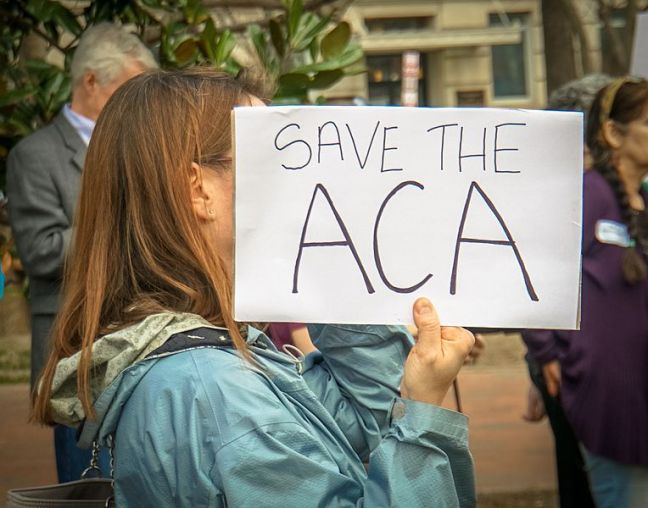
SUCCESS IN NJ PUSHBACK ON EFFORTS TO DESTROY ACA

Here is a bit of great news I am happy to share.

New Jersey, whose individual health insurance market was one of the nation’s most expensive a few years ago will be one of the cheapest in 2019, according to a recent report from New Jersey Policy Perspective.  We have fallen from paying the ninth highest premiums in 2014 to 47th highest in 2019.  Indiana ($339), Massachusetts ($332) and Minnesota ($326) will be the only states paying less than New Jersey’s $352 per month.

That compares with a national average of $477 and neighboring state averages of  $684, $569, and $484, in Delaware, New York and Pennsylvania, respectively.

The numbers are from Kaiser Family Foundation data tracking premium costs in every state from 2014 to 2019. During that period, New Jersey premiums rose from $323 in 2014 to a high of $413 last year.

For a family of four opting for the least costly silver plan, that translates to an annual savings of $3,264 (from $15,132 down to $11,868). Comparable figures for a 60 year old are a $1,944 drop (from $10,152 to $8,208) and for a 27 year old, a $792 decrease (from  $3,912 to $3,120).

The price drop is all the more surprising and welcome in the face of ongoing efforts by the Trump Administration and the GOP-led Congress to dismantle and undermine the Affordable Care Act. Their efforts have included repeal of the individual mandate, discontinuation of certain subsidies, shortened enrollment periods, and other actions that have created uncertainty in the market that has itself driven up the cost of policies.

New Jersey has pushed back in various ways, including enacting laws that created a state mandate and established a reinsurance program and the launch of a Get Covered campaign. It is working!

We are now more than halfway through the sign-up period which began on November 1 and ends December 15. If you obtain your healthcare through the individual market, DO NOT DELAY. And make sure others do not either, by spreading the word.

Read the New Jersey Policy Perspective article on the falling premiums here.

LET’S DO IT RIGHT ON NEW VOTING MACHINES

Two New Jersey towns at opposite ends of the state–Westfield, in Union County, and National Park, in Gloucester–tried out new voting machines on Election Day last week.

Both towns were part of a state pilot program paid for with federal HAVA (Help America Vote Act) Election Security Grants. New Jersey which received roughly $10 million of the $380 million national total, allocated $2.5 million for the pilot, plus another $250,000 for a related pilot to audit the votes cast on the new machines. Continue reading LET’S DO IT RIGHT ON NEW VOTING MACHINES

NEW JERSEY VOTES STILL HACKABLE

Election Day is upon us again and it is one that many of us view as crucial to saving our democracy, as we mobilize to flip control of the U.S. House of Representatives, and possibly the Senate too, so we can thwart the destructive policies of Donald Trump.

The day after last year’s election, I wrote a blog post about the vulnerability of New Jersey’s  voting machines. I am sorry to say that, although some small steps have been taken since then, our votes are still at risk, despite mounting evidence that they are not secure and that Russia hacked some states’ election systems in 2016.

New Jersey remains one of a handful of states where the validity of election results cannot be confirmed because the votes are recorded electronically and lack a verifiable paper trail.  Continue reading NEW JERSEY VOTES STILL HACKABLE