NJ Appleseed has been working for many years to protect the integrity of the voting process and continues to do so.
It played a key role in the passage of a 2008 bill requiring that election results be audited to insure that they are correct. That law has never been implemented because audits require paper ballots and until 2019, all but one county in NJ used purely digital paperless voting machines.
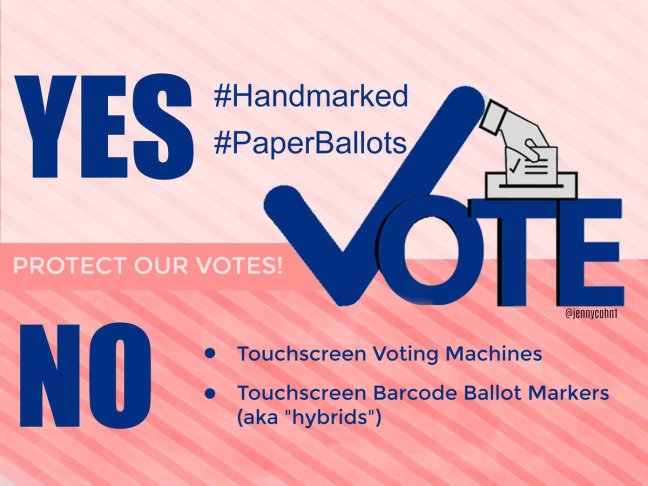
More recently, NJ Appleseed has supported replacing those digital machines with a system that voting security experts tells us in the most secure: auditable paper ballots that are hand-marked by the voter, rather than the machine, and read by optical scanners, to reduce the risk of tampering.
NJ Appleseed was part of a campaign in Essex County, led by the grass roots group SOMa Action (from South Orange and Maplewood), that recently succeeded when the Freeholders voted in January to approve the purchase of such a system, the first in New Jersey. It will be in place for the 2020 primary and general election.
The next step will be to try to persuade other counties to do the same. Here is my op-ed on the subject, which was recently published in the Star Ledger and posted on its website.
I was greatly saddened to learn a few weeks ago that David Perry Davis died unexpectedly on October 3, at the age of 55.
David was a passionate and principled advocate who, probably more than any other individual, improved the quality of justice in the New Jersey court system for poor people who fall behind on child support.
In addition to the countless clients and colleagues whose lives he touched and improved through his practice as a family lawyer, David won two landmark court decisions that protect parents who owe child support from being locked up or barred from driving just because they cannot afford to pay. Continue reading Remembering David Perry Davis
Current Master Plan published in 2012. This Master Plan serves as the underlying principles of the current Newark Zoning and Land Use Regulations (NZLUR). Any changes to NZLUR must be consistent with Newark’s Master Plan.
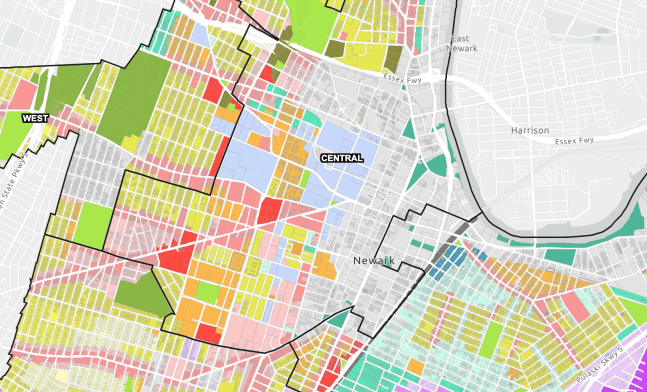
Current zoning regulations adopted in March of 2015 that govern land use, building bulk, parking, design guidelines, and the overall form of our city. Any development application that deviates from these regulations requires a variance from the Central Planning Board (CPB) or Zoning Board of Adjustment (ZBA). The interactive zoning map below allows users to zoom into particular properties to check the zone designation.
*The Newark Zoning and Land Use Regulations have been amended to include the following. Any amendments supersede language in NZLUR.
Inclusionary Zoning Ordinance (IZO) In general, the IZO requires medium to large residential developments to set aside at least 20% of apartments to be “affordable” as defined by the State of New Jersey. These rules apply to new developments over 30 units or rehabilitated developments over 40 units under the following situations: developments seeking ‘C’ or ‘D’ variances from NZLUR or a Redevelopment Plan; all developments sold by the City of Newark through a redevelopment agreement; and all developments in an MX-3 zone (defined below);
MX-3 This ordinance created a new zone in the Ironbound neighborhood next to Penn Station. In addition, it introduced new uses and modified bulk requirements in all zones throughout the City. The MX-3 ordinance was adopted despite being inconsistent with Newark’s Master Plan. The New Jersey Municipal Land Use Law requires that the municipality state official reasons why the ordinance was adopted with the inconsistencies. Read here for the official response.
Zoning Board Application Fees To help increase the processing speed of applications, the city revised the rules for the Zoning Board to assess fees on applications. Presumably, this revenue will be used to hire more planning staff to handle applications.
Zoning Board Meetings and Stipend This permits the ZBA to meet up to 40 times per year, allows 2 additional alternate board members, and provides a $5000 stipend per year for each member.
In particular areas throughout Newark, redevelopment plans overrule the NZLUR and govern the land-use, building bulk, and other regulations. In general, these plans are applicable throughout Downtown, the Kent/Brenner/Springfield neighborhood, and the Riverfront.
Office of Planning and Zoning
The website for Newark’s Office of Planning and Zoning includes links to the Master Plan, NZLUR, the CPB, the ZBA, the Landmarks and Historic Preservation Commission, as well as many other links and resources to learn about planning and development in Newark.
Organizations and Authorities
Below is a list of planning and development organizations and governmental institutions that set policy on planning and land-use issues in our area.
North Jersey Transportation Planning Authority The NJTPA is the federally authorized Metropolitan Planning Organization for the 13-county northern New Jersey region. Each year, they oversee funding for transportation improvement projects and “provide a forum for interagency cooperation and public input.”
Regional Plan Association The RPA is an urban research and advocacy organization. RPA works to “improve the prosperity, infrastructure, sustainability and quality of life of the New York-New Jersey-Connecticut metropolitan region.”
Interactive Parking Map
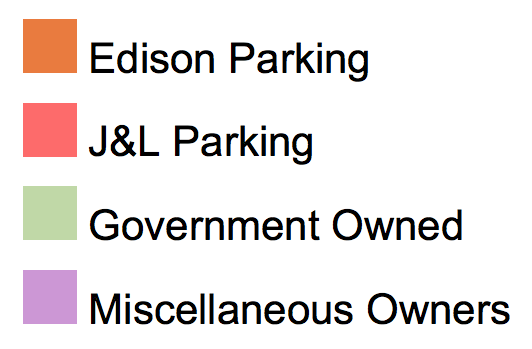
Explore an interactive map of the 300+ acres of parking in Downtown Newark. This map is part of PLANewark’s ongoing fight against the expansion of surface parking in Newark. Click the rectangle icon on upper right hand corner of map to view full screen. Click on individual, color-coded lots to view information on the property owner and acreage.
A recent blog post discussed the case of Michael Baca, a Presidential Elector from Colorado who instead of voting for Hillary Clinton–as required by state law because she won the state’s popular vote–voted for moderate Republican John Kasich.
Along with other Electors in Colorado and elsewhere, Baca was trying to get Republican electors who might be similarly horrified by the prospect of a Trump presidency – it is hard to believe now but there were many in 2016–to help save us from that fate by diverting enough votes to throw the presidential race into the House of Representatives. The U.S. Constitution requires that when no candidate reaches the 270 votes needed for an Electoral College majority, the House determines who gets to be President from among the top three vote-getters, as has happened on three occasions.
All but two states require Electors to vote for the winner of the state’s popular vote in a winner-take-all manner. Throughout history, a handful of Electors have refused to do so and they have often been referred to as Faithless Electors. Baca, however, who launched his effort with Peter Chiafalo, a Democratic Elector from Washington State, dubbed his group the “Hamilton Electors,” a name with more contemporary cachet thanks to the Broadway musical. He named it after founding father Alexander Hamilton, whose Federalist paper No. 68, described the role of Electors in making the case for having the President chosen by them, rather than by the popular vote.
The State of Colorado refused to count Baca’s vote, removed him, and replaced him with someone who then voted for Clinton. It also threatened Baca with criminal prosecution but did not carry through on the threat.
Baca sued and on August 20, 2019, the Tenth U.S. Circuit Court of Appeals held that states, though they determine how Electors are chosen, cannot dictate to them how they vote, no remove them or punish them for their votes. “The text of the Constitution makes clear that states do not have the constitutional authority to interfere with presidential electors who exercise their constitutional right to vote for the President and Vice President candidates of their choice,” wrote U.S. Circuit Judge Carolyn B. McHugh, in Baca v. Colorado Department of State. She was joined by Judge Jerome A. Holmes in the 2-1 ruling, with the third judge on the panel, Mary Beck Briscoe, dissenting based on her view that the case was moot.
Next month, New Jersey will start reaping the benefits of a bill enacted earlier this year to establish its own health insurance exchange rather than continuing to rely on the federal one.
Lilo Stainton of New Jersey Spotlight reported on October 9 that the Trump administration has given the necessary approval for the state to take its first step in transitioning to a fully state-run exchange by 2021.
As a result, during this fall’s enrollment period, from November 1 through December 15, health plans for 2020 will still be sold through the federal healthcare.gov website but New Jersey will have more control over the process and has committed to spending much more than last year on public outreach and assistance with enrollment.
Donald Trump won the Presidency in 2016 despite being trounced by Hillary Clinton in the popular vote.
Thanks to the Electoral College, the profoundly undemocratic body that actually elects our Presidents and Vice-Presidents, Trump’s slight margin of victory in a few key states outweighed the millions more votes cast nationwide by those who preferred Clinton.
Most years, the results of the Electoral College vote match up with the popular vote. But after 2016, when it thwarted the will of the people for the second time in 16 years (and for two of our last three Presidents), many people realized that we must do something about it if we want to make sure that the person who wins the most votes is the one who becomes President. Continue reading RULING ALLOWS ELECTOR DISCRETION BUT MIGHT IMPEDE EFFORT TO CIRCUMVENT ELECTORAL COLLEGE
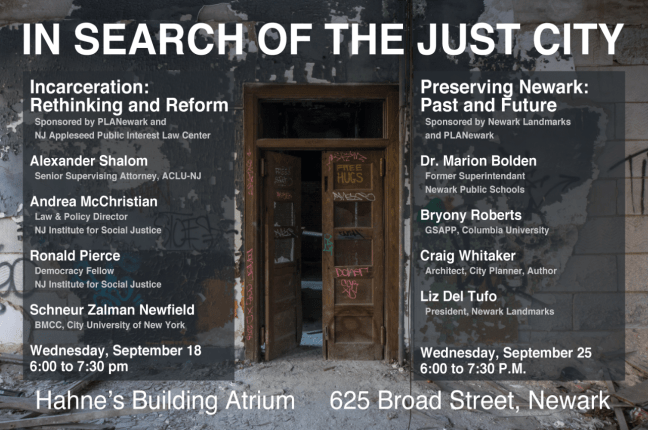
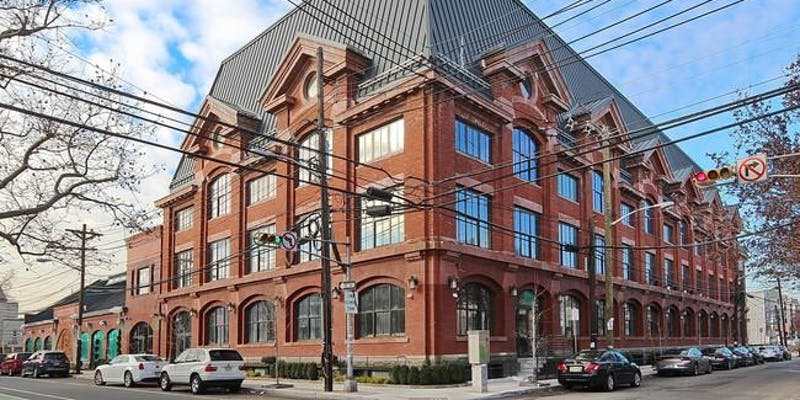
Thank you for expressing interest in the old Essex County Jail exhibit in the Newark Hahne’s Building. We are pleased to invite you to TWO upcoming events reflecting on this exhibit, its contents, and Newark history. We hope to see you there!
.
INCARCERATION: RETHINKING AND REFORM
Wednesday, September 18th, 6:00-7:30pm
This panel is comprised of criminal reform advocates to further explore the exhibit, In Search of the Just City: Rethinking the Old Essex County Jail. Panelists will discuss the relationship between social norms of punishment and the way society incarcerates its members judged to have violated the law. Using the 1837 Essex County Jail as a starting point, panelists will describe the criminal justice reforms they are currently involved in, such as voter enfranchisement initiatives, educational programs, and bail reform. This panel aims to stimulate discussion and provide opportunities for attendees to become involved in criminal justice and prison reform.
Speakers:
– Alexander Shalom (Senior Supervising Attorney, ACLU-NJ)
– Andrea McChristian (Law & Policy Director, NJ Institute for Social Justice)
– Ronald Pierce (Democracy and Justice Fellow, NJ Institute for Social Justice)
– Schneur Zalman Newfield (Borough of Manhattan Community College, CUNY)
Hosted By:
NJ Appleseed Public Interest Law Center and PLANewark
.
0:00 Renee Steinhagen
9:01 Andrea McChristian
23:48 Ronald Pierce
35:16 Schneur Zalman Newfield
48:30 Alexander Shalom
1:07:11 Q&A
1:17:42 Concluding Remarks
.
.
.
PRESERVING NEWARK: PAST AND FUTURE
Wednesday, September 25th, 6:00-7:30pm
What is the role of Historic Preservation in our growing city? How do we recognize our past wrongs while building a more vibrant future? In many ways, Newark’s long awaited Renaissance is here. But what will happen to the unique cultural and historic spaces that make our city vibrant? This panel discussion will delve deep into the future planning of our city and the role that historical places play in that development. Our panelists have a range of experience to help broaden the discussion beyond simply aesthetics and answer complicated questions about culture, finance, and urban planning. Please join us for an evening to open up the dialogue and build a path forward.
Speakers:
– Dr. Marion Bolden (Former Superintendent, Newark Public Schools)
– Bryony Roberts (GSAPP, Columbia University)
– Craig Whitaker (Architect, City Planner, Author)
– Liz Del Tufo (President, Newark Landmarks)
Moderated By:
Tyler Tourville (Chair of PLANewark, Architectural Designer)
When the United States Supreme Court weakened Voting Rights Act protections in 2013, many worried that it would open the floodgates to a new wave of voter suppression.
There was good reason to be concerned, as the Brennan Center for Justice has once again confirmed.
A report it released in July 2018 found that from 2014 to 2016—the two years following the 2013 decision in Shelby County v. Holder, 570 U.S. 529—almost 16 million people throughout the U.S. were removed from voting rolls. That was almost four million more than the number who were removed from voter lists between 2006 and 2008, a roughly 33% increase that far exceeded the growth in total population (6%) and total registered voters (18%) over that same time frame.
The Brennan Center also found that the purging occurred at a higher rate in those areas, mainly in the South, that because of their history of discrimination had been subject to the protections abrogated by the Supreme Court in Shelby. For the two election cycles between 2012 and 2016, those so-called preclearance jurisdictions, which were let off the hook by the Shelby ruling, had purge rates significantly higher than elsewhere. The Center calculated that if those jurisdictions had remained subject to the previous constraints, two million fewer voters would have been struck from the lists. Texas alone erased more than 363,000 voters in the first election cycle after Shelby.
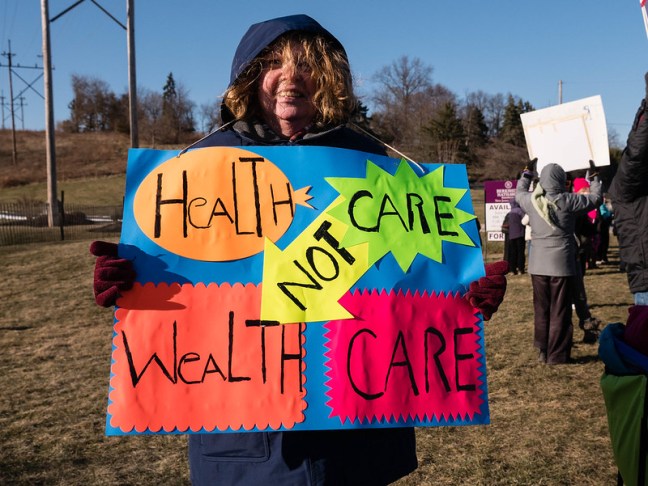
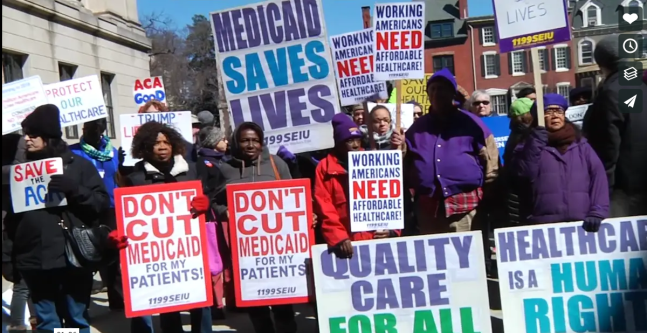
More than 20 U.S. state governments betrayed the health and well-being of their residents five years ago when they decided against expanding Medicaid pursuant to the Affordable Care Act (ACA) aka Obamacare. Now, thanks to a just published study, we have a good idea of the human cost: nearly 16,000 deaths over the four-year period from January 2014, when the expansion initially took effect, through the end of 2017.
The study, released on July 21, looked at what would have occurred if Medicaid had been expanded nationwide in 2014. Based on the differences in mortality between states that expanded and those that didn’t, the study found that 15,600 deaths in the non-expansion states would have been prevented if those states too had expanded Medicaid. Continue reading REFUSAL TO EXPAND MEDICAID KILLED 15,000+, NEW STUDY FINDS
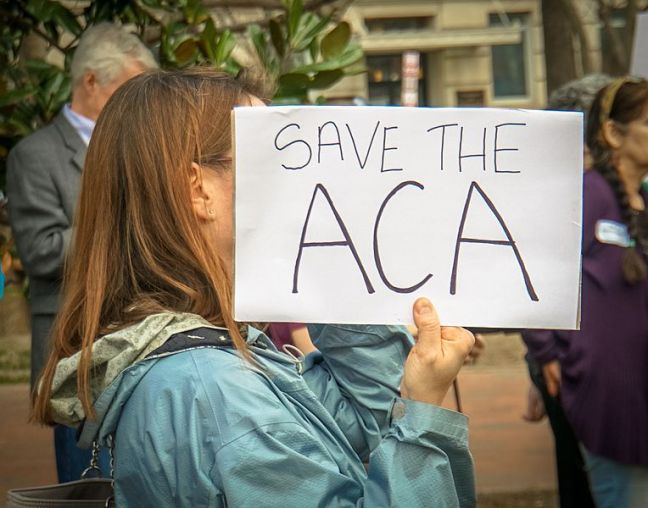
New Jersey took a major step forward in protecting health care coverage for state residents on June 28, when Governor Phil Murphy signed a law authorizing the creation of New Jersey’s own health exchange.
Only 11 states, including New York and California, plus the District of Columbia, currently have their own exchanges, which are used by individuals and small employers to purchase government regulated and standardized health insurance policies under the Affordable Care Act (ACA), commonly known as Obamacare. Continue reading NJ WILL HAVE OWN HEALTH EXCHANGE






 NJ Appleseed