Homes for All Newark files lawsuit to stop controversial 30-story skyscraper in Ironbound community

Ironbound Residents to Newark:
Our Health, Homes, and Future Are Not for Sale

Also posted to Jersey Digs and Patch.com

Homes for All Newark has filed a lawsuit to stop the controversial Iberia II Realty Urban Renewal LLC project, calling it a direct threat to the Ironbound’s health, housing, and community fabric.

Homes for All Newark is a grassroots organization of Newark residents committed to ensuring that all Newarkers have the right to remain, thrive, and participate in their neighborhoods. “We are not opposed to responsible development, but we demand a voice,” said Tanisha Garner, President of Homes for All Newark. “We just want development that’s good for the existing community and doesn’t displace us.

Environmental Crisis Ignored

Ironbound residents face constant threats of air and water pollution and already suffer some of the highest rates of cancer and respiratory illness in Newark. The proposed Iberia II Realty project would pave over 98% of the site, leaving almost no green space, adding to the heat island effect and sending even more polluted runoff into overwhelmed sewers and the already-contaminated Passaic River which was contaminated with Agent Orange from a local Superfund Site.

“The Ironbound is an Environmental Justice Community, fighting every day for clean air and water,” said President Garner. “The city is letting developers gamble with our health.”

Infrastructure and Housing at Breaking Point

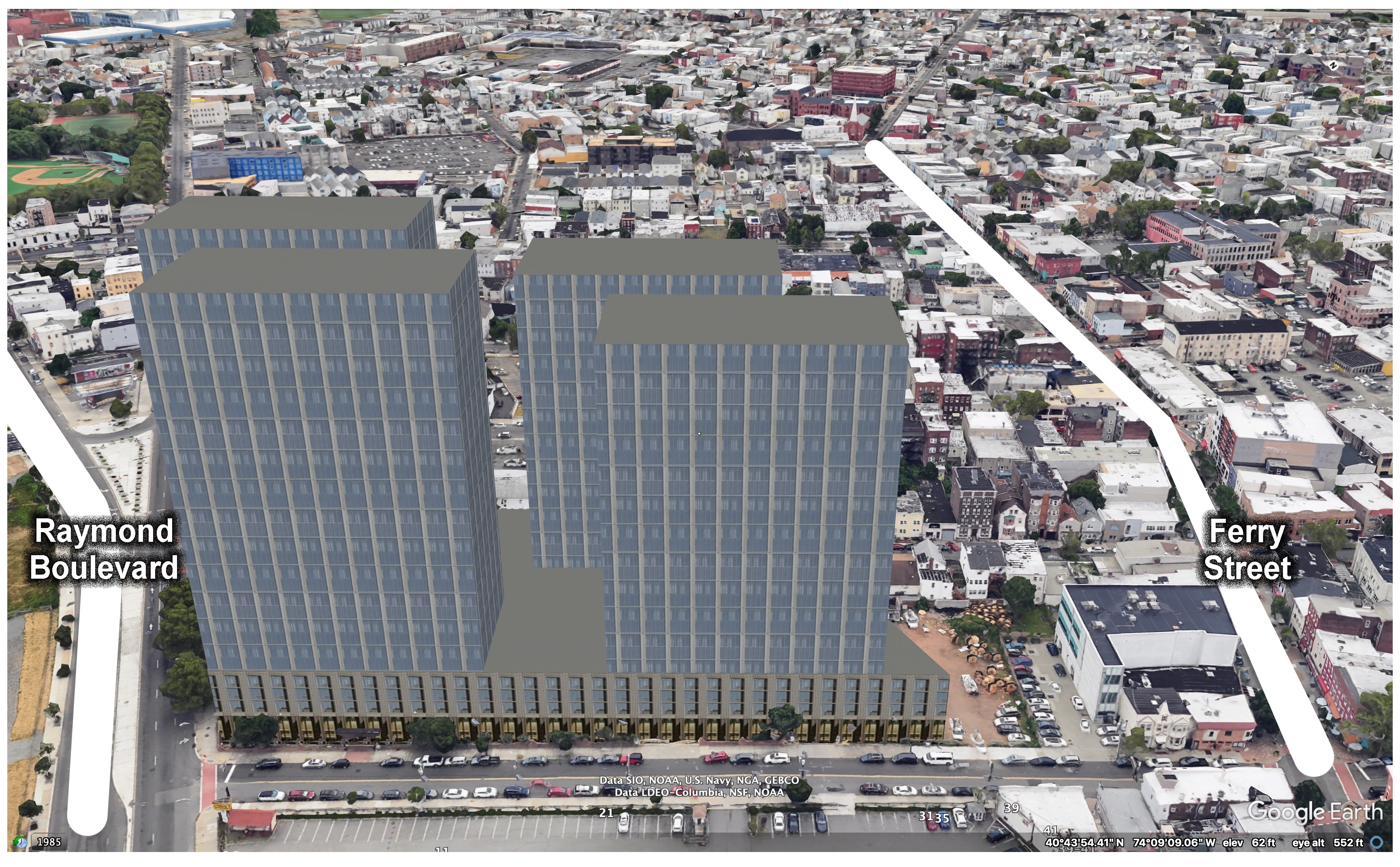
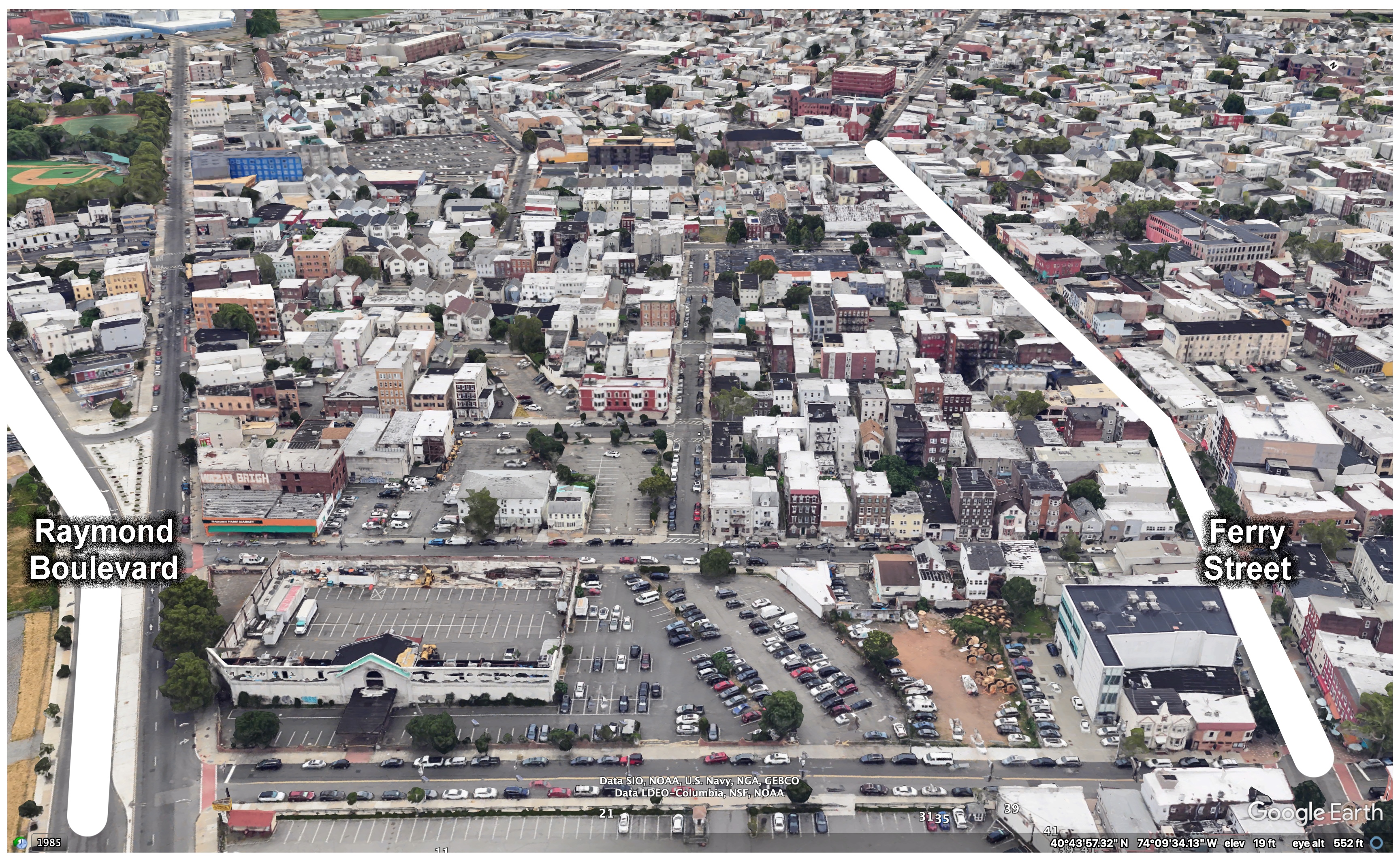
The proposed 26- and 30-story towers would overwhelm local infrastructure, worsen flooding, drive up property taxes and rents. This fuels the fears of residents like Lenny Thomas, who states, “The community has worked hard to improve its quality of life, but this project does little for the present residents but raise their cost of living, tear down their homes, and make spaces for people outside the community.”

The City states that there is a shortage of low income housing. Recently Terrell Homes a NHA site which is the backyard of Riverfront Park and the Passaic river. The 275 low income units were sold and now closed. A 68 unit senior building is being built. Only 13% of the units are restricted to 30% area median income. This has added to the housing shortage of low income units throughout the city which is not being replaced. “There isn’t a one for one replacement of low income housing that has been demolished Citywide,” said Tanisha Garner, President of Homes For All Newark

Community Silenced by a Broken Process

Residents say the city’s approval process favored developers at every turn: Officials withheld key documents, ignored public input, and the Newark City Council amended “The Sixth Amendment to Newark River: Public Access and Redevelopment Plan Ordinance.” These actions sidestep legal requirements and undermine the integrity of the city’s planning process.

“These monster towers fail to address the lack of low-income housing, poor air quality, and congested streets that plague our neighborhood,” said John Goldstein, HFAN member. “I hope this lawsuit will result in a more inclusive planning process with better outcomes for Ironbound residents.”

The city’s approval process has failed to respect the Ironbound’s identity as a small, tight-knit community with a rich history and a strong sense of cultural belonging. “I want to be able to see the sun,” said Patricia Lourenco, a concerned Down Neck/ Ironbound resident. “I work six days a week. I want to be happy when I wake up, and the sun adds to my quality of life. We are not New York, where tall buildings are everywhere. We are the Ironbound, and we deserve a say.”

Before vs. after comparison of the 26/30 story towers at proposed site
< Drag Slider >
Residents Demand Community Before Profit

Homes for All Newark calls for:

  1. A legally binding Community Benefits Agreement (CBA) between the developer and Ironbound residents
  2. Respect the Neighborhood Scale: A 12-story height cap to respect the neighborhood’s scale
  3. At least 50% of units affordable to Newark families (40–60% AMI)
  4. 75% of affordable units as two- or three-bedrooms
  5. 10% of all units reserved for Section 8 voucher holders
  6. A Federally Qualified Health Center and affordable retail space for local Entrepreneurs
  7. Local hiring for all jobs
  8. Restore the Riverfront parcel to add to the tree count

Ironbound: Power in Community

“We know the power to shape our future is in our hands,” said President Garner. “We urge city leaders to halt this reckless project and work with us—not against us—to build a healthy, affordable, and just Ironbound.”

“If this can happen in the Ironbound, it can happen anywhere in Newark,” continued President Garner.

“Every neighborhood deserves real transparency, meaningful community input, and development that puts residents first—not just profits. The power to protect our homes and shape our future is in our hands, and We urge all Newarkers to Stand Together and to Defend the SOUL and Future of Our City.”

Media Contact:
Tanisha Garner
President
Homes For All Newark
chozindesign6@gmail.com
Murphy’s Law: The Campaign Finance Reform That Wasn’t

On April 3, Governor Murphy signed into law the Elections Transparency Act, just four days after the Legislature approved it. He did so with no fanfare, which was fitting for the shameful piece of legislation it is.  As Matt Friedman wrote for Politico, “Nobody wants to own the Elections Transparency Act.”  Murphy held no press conference and issued no statement about the bill becoming law, nor did any of its legislative sponsors. But the newspapers weighed in and they were scathing. The New York Times headline that day read “Gov. Murphy Signs Law Decried as Frontal Assault’ on Good Government,” while an op-ed in the next day’s Bergen Record ran under the caption “Phil Murphy just upended a national ‘model’ for regulating campaign finance.”

The timing was a bit ironic. Just one day before the first former president ever to be charged with a crime was to be arraigned in nearby NYC on charges having to do with violations of campaign finance law, the governor of the state next door was taking an axe to its own ability to rein in campaign finance abuses.  Contrary to what the name Elections Transparency Act suggests and however good the original intention behind the law might have been, most of it has nothing to do with promoting transparency. Instead, the law is far more likely to boost the power of big money in New Jersey politics, allowing it to drown out the voices and values of voters, thus undermining our democracy.

The new law does this in a variety of ways, including doubling contribution limits, authorizing additional monies for slush funds (so-called “housekeeping accounts” to pay for administrative expenses) on top of that, and eliminating local pay-to-play laws, while loosening the already lax state-wide standard. It also hamstrings the Election Law Enforcement Commission (ELEC), the hitherto highly effective agency whose job it is to enforce the laws governing the funding of political campaigns in New Jersey. Not only does the law destroy the independence of ELEC by giving the Governor (one time only) unchecked authority to fire and replace all of its commissioners without the usual advice and consent of the Senate, but it drastically curtails the amount of time allowed for ELEC to investigate violations of the law.  Even worse, it makes the latter change retroactive, seemingly (and conveniently) tossing out three pending complaints against statewide Democratic fundraising committees along with about 80% of ELEC’s entire docket of pending matters.

The proponents of the legislation, which passed along almost strictly party lines—only four Dems in both houses voted “no” (Senator Nia Gill and Assembly members Dan Benson, John McKeon and Cleopatra Tucker), only six Republicans approved it (Senators Christopher Connors and Vincent Polistina and Assembly members Dianne Gove, Donald Guardian, Kevin Rooney and Brandon Umba) and an initial Republican sponsor, Senator Steven Oroho, took his name off the bill — tended to justify the legislation based on the disclosure  provisions.  Those provisions are good as far as they go, but any good they accomplish is far outweighed by more problematic aspects of the legislation.

Following the U.S. Supreme Court’s 2010 decision in Citizens United v. FEC, which reversed longstanding campaign finance restrictions and enabled corporations and other outside groups to spend unlimited amounts on elections, huge amounts of dark money have flowed through those so-called “dark money groups,” which need not disclose their donors, and been used to influence elections. Under the new law, donors above a certain threshold will have to be disclosed and the law’s supporters argue that, combined with the increase in campaign contribution limits, that will shift political giving back to candidates and campaigns, who are required to operate more openly. 

Here is a closer look at what the Elections Transparency Act (ETA) does. First, with regard to transparency, it requires independent expenditure committees — nonprofit and political groups not tied to a particular candidate, the source of so-called “dark money” — to report to ELEC campaign contributions in excess of $7,500 and all expenditures regardless of amount. A last-minute amendment expanded the definition of “independent expenditure committee” beyond 501(c)(4) nonprofit social welfare organizations such as NOW, ACLU, NRA, and the Sierra Club, to also encompass 501(c)(6) groups, defined by federal tax law as “Business leagues, chambers of commerce, real-estate boards, boards of trade, or professional football leagues . . . ,  not organized for profit and no part of the net earnings of which inures to the benefit of any private shareholder or individual.”  The bill also establishes a cumulative reporting requirement for independent expenditure committees.

Further, it requires candidates and political committees to report campaign contributions greater than $200, down from $300 under prior law, and all expenditures, regardless of amount. There is also a change from 48 hours to 72 hours in the deadlines for reporting certain contributions and expenditures made within a certain period of time before an election though all must be reported within 24 hours in the week prior to election.

That is pretty much it for the transparency/reporting provisions and it is not even clear that those would survive a constitutional challenge. Very similar language in a law enacted in 2018 was struck down by a federal court the following year in Americans for Prosperity v. Grewal, on the ground that it violated the First Amendment.  When ELEC Executive Director Jeffrey Brindle testified before the Senate Judiciary Committee on February 23 in support of some aspects of the bill, he cautioned that the disclosure requirements for independent expenditure groups need to be “narrowly tailored” to electioneering activity to ensure that the ETA would be constitutional, unlike the 2018 measure. That was not done.

Continue reading Murphy’s Law: The Campaign Finance Reform That Wasn’t

GOVERNMENT TRANSPARENCY MEASURES DIE AGAIN

Two pieces of legislation that would bolster government transparency were killed off on November 15 when they failed to win approval from a Senate Committee. The bills, S-379 and S-380, would have strengthened the Open Public Meetings Act (OPMA) and the Open Public Records Act (OPRA), to make government meetings and records more accessible to the public.

Both measures were killed off in the Senate’s State Government Committee, which has five members and thus requires three votes in favor for a bill to advance.  On each bill, the two Republicans, Samuel Thompson and Vincent Polistina, went first and voted “no.”  They were followed by Senator Linda Greenstein, a Democrat who was substituting for Committee Vice-Chair Dawn Addiego but did not even show up, instead leaving word that she abstained on both bills. With no hope of three ‘Yes” votes, the other two Democrats on the Committee, Chairman James Beach and Shirley Turner, did not have to cast a vote either way on the bills. Following mention of Greenstein’s abstention on S-379, Beach reacted “so the bill does not come out of committee.” And on S-380, he said “Therefore, it does not come out of committee.”

It seemed a cowardly way to kill the legislation, with no Democrat having to go on record as opposed to greater transparency, while stopping the bills in their tracks and probably for the foreseeable future, given the imminent retirement of primary sponsor Loretta Weinberg.

The bills, in some form, have been kicking around the Legislature for more than a decade.  As far back as 2010, Weinberg introduced S-1351 (OPMA) and S-1352 (OPRA), and some version of them has been introduced in every session since then.

I wrote about an earlier version of Weinberg’s OPRA bill on this blog in 2017. Joining her as a cosponsor of S-1046 was Republican Joseph Pennacchio. In the Assembly, Democrat Gordon Johnson and Republican Erik Peterson cosponsored counterpart bill, A-2697. On that go-round, after sitting more than 16 months in the Senate State Government committee (where open government bills apparently go to die), S-1046 was transferred to the Senate Budget and Appropriations Committee which reported it out of committee in June 2017 without recommendation. The vote was 7 in favor, 1 against and 5 abstentions. Notably, the abstainers included Greenstein (her m.o.?) and fellow Democrat Patrick Diegnan, along with Republicans Anthony Bucco, Samuel Thompson and Jennifer beck, while the lone “no”  vote came from Jeff Van Drew, back when he was a Democrat, while the “yeses” included two Republicans, Steven Oroho and Kevin  O’Toole.

In all of the six legislative sessions, including this one, in which the bills have been introduced, neither has ever made it to a floor vote. Weinberg persisted, repeatedly reintroducing the bills and negotiating with the stakeholders –municipalities, school boards, county clerks, etc. – in an effort to craft a workable resolution, but to no avail. And soon she will be gone.

If Weinberg, an experienced, influential and popular lawmaker who during her last few years served as Senate Majority leader, the second most powerful position in the Senate, could not get these long-overdue transparency reforms passed during her tenure, it is hard to imagine how it will get done after she leaves.

The only person to testify regarding the bills on Nov. 15 was John Burns, Senior Legislative Counsel for the NJ School Boards Association, whose members are subject to OPMA and OPRA. Burns told the committee that he had not seen the latest draft of either bill and regarding S-380, the OPRA bill, could not support it because of its attorney fees provision.

The legislation would have furthered government transparency in multiple ways listed below. Read through the list and ask yourself why your legislators have been unable and/or unwilling to pass this legislation.

Among other improvements, the OPMA bill, S-379, would have:

Continue reading GOVERNMENT TRANSPARENCY MEASURES DIE AGAIN

Water Agency Whistleblower Group Has Lingering Questions re Booker Role in Scandal

On January 7, 2021, former Newark police officer Janell Robinson was sentenced to nine years in federal prison for her role in a massive fraud and kickback scheme that sent half a dozen others to jail and took down the Newark Watershed Conservation & Development Corporation (“NWCDC”), the quasi-public entity that managed Newark’s reservoirs and ran its water treatment plant.

The corruption was unearthed by the Newark Water Group in its efforts to prevent Newark from privatizing its water system.

Starting in 2012, New Jersey Appleseed represented the Water Group members, who formed a Committee of Petitioners to pursue the Initiative and Referendum (I&R) process, by which they sought to have the City Council pass an ordinance blocking privatization or submit the issue to the voters. After the City Council adopted the proposed ordinance and Mayor Cory Booker responded by suing the Council and the Committee, NJ Appleseed defended the Committee and assisted the subsequent effort to bring to justice those responsible for the corruption and help shepherd the NWCDC through receivership and bankruptcy.

The NWCDC is long gone, its duties assumed by the Newark Water & Sewer Department, and everyone else convicted in the scandal was sentenced years ago, with two of them currently serving lengthy federal prison terms. Robinson’s case took longer because she went to trial rather than pleading guilty like the others. Her sentencing would seem to signal a final closing of the book on this sordid tale but it does not. There remain too many unanswered questions that are set forth in the following statement issued by the Newark Water Group in response to the sentencing.

Many of the questions concern Cory Booker who was the Chairman of the NWCDC Board of Directors but never attended a single meeting.

Continue reading Water Agency Whistleblower Group Has Lingering Questions re Booker Role in Scandal

LITTLE COOPERATION WITH ICE IN NJ OTHER THAN ESSEX COUNTY

A recent report on the extent to which state, county and local law enforcement agencies in New Jersey have been cooperating with federal immigration authorities has not received much attention so I am shining a light on it.

What I find particularly striking and upsetting is what it shows about the jail in Essex County, where I live. There are more instances of Essex County Corrections working with Immigrations and Customs Enforcement (ICE) than in all other 20 counties combined. Essex County has even collaborated more than the state Department of Corrections and thus the entire state prison system. 

Continue reading LITTLE COOPERATION WITH ICE IN NJ OTHER THAN ESSEX COUNTY

RANKED CHOICE DEBUTS IN MAINE VOTE FOR PRESIDENT

With the 2020 Election well under way–as voters around the country stand on long lines to vote early in person and place completed paper ballots into drop boxes and mail slots — eyes are on Maine, which is poised to become the first state to use ranked choice voting in electing the president.

Maine already broke new ground in 2018, when it became the first state to elect its Congressional representatives and a U.S. Senator–Angus King, an Independent–with ranked choice voting aka RCV, which even altered the outcome in one race. Democrat Jared Golden initially trailed Republican incumbent Bruce Poliquin by about 2,000 votes in District 2, but ultimately beat him by about 3,000, after picking up roughly 90% of the second-choice votes of the two independent candidates in the race. Aided by RCV, Golden became the first challenger to oust an incumbent in that District in a century.

For this year’s presidential race, Maine’s four Electoral College votes are at stake. That is not many, and it could be as few as 3 because Maine is one of two states where those votes can potentially be split between two candidates. Nevertheless, Maine is considered a swing state and the use of ranked choice voting could determine who gets its 3 or 4 Electoral College votes and conceivably determine the outcome.

Not only that. This election stands a real chance of flipping the Senate from Republican to Democratic control and RCV is even more likely to make the difference there. One of the Republican seats most in play is that of Senator Susan Collins of Maine, whose failure in 2018 to vote against the confirmation of Brett Kavanaugh for the Supreme Court exposed the hollowness of her claim to be a pro-choice moderate. Running against Collins are Democrat Sara Gideon and two independents, Lisa Savage a former Green, and Max Linn, who has run in the past as a Republican.  Recent polls show Gideon with a slight lead over Collins, close enough that reallocated votes could make the difference. As of Oct. 28, one poll had Savage at 4.7% and Linn at 1.7%. With RCV, those Savage votes are likely to go to Gideon, bolstering her advantage over Collins.

Continue reading RANKED CHOICE DEBUTS IN MAINE VOTE FOR PRESIDENT

WHY YOU SHOULD VOTE “NO” ON BALLOT QUESTION 3

A little more than a month from now, New Jersey voters will start receiving their mail-in ballots for November’s general election. In addition to all the candidates running for office, those ballots will contain three statewide questions on which voters will also get to decide.

You have probably heard a lot about Ballot Question No. 1, whether or not to legalize marijuana.

Ballot Question 2 would extend an existing $250 property tax deduction for veterans who served in time of war to those who served in peacetime as well. It follows a ballot question from last year that extended the same deduction to retirement communities that house veterans, which were required to pass the value of the deduction on to the veterans.

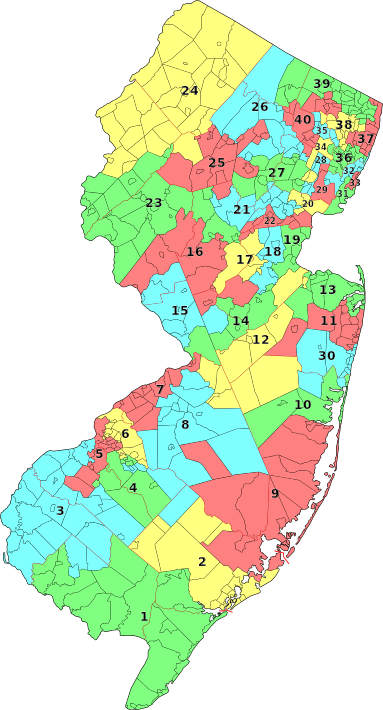
I am here to talk about the third question, which is a bit more complicated and has not received much attention: a proposed amendment to the New Jersey constitutional provisions that govern redistricting, the process by which state legislative maps are redrawn every 10 years based on updated Census data. Continue reading WHY YOU SHOULD VOTE “NO” ON BALLOT QUESTION 3

Appleseed Network Applauds Thursday’s Supreme Court Decision Upholding DACA

The Appleseed Network celebrates the Supreme Court’s 5-4 ruling on Thursday morning, June 18th, in favor of blocking the termination of the Deferred Action for Childhood Arrivals (DACA) program. The Court found that the Trump administration’s September 2017 move to terminate the program was “arbitrary and capricious,” and that the impact of the program’s termination on DACA recipients – at least 650,000 young immigrants brought to the US as children – was not properly taken into account.

DACA is a program initially announced in 2012 by former President Barack Obama that allows undocumented young people across the country to harness their skills and education to work and contribute to their communities. Dreamers (those protected under DACA) are able to enroll in college, obtain driver’s licenses, and continue their careers in the place they know as home. Under President Trump’s termination of DACA, new applications to the program were no longer accepted. Thursday morning, the Court’s positive ruling reaffirmed that DACA recipients will continue to be able to live in the US without fear of deportation, as well as pursue higher education and gainful employment.

DACA recipients are highly involved in communities throughout the US, practice political and civic engagement, and have been woven into the economic fabric of America. The Center for American Progress reported that DACA recipients and their households contribute $5.7 billion in federal taxes and $3.1 billion in state and local taxes annually. Additionally, according to the Migration Policy Institute, “55% of DACA recipients are employed, amounting to 382,000 workers [and] 62% of those not in the labor force are enrolled in school.” During the current COVID-19 crisis – which has taken the lives of at least 120,000 people in the US – it is crucial that we acknowledge the 29,000 Dreamers who are working as health care workers and home care providers on the frontlines, and the more than 150,000 Dreamers who are essential workers providing education, growing and producing food, and keeping shelves stocked. Appleseed works to promote equity, security, and justice for children and families across the US and Mexico, and we applaud the DACA program as both a pathway for young undocumented immigrants to achieve their educational and economic goals as well as a recognition of immigrants’ inherent human rights, no matter their citizenship status.

While the ruling is a huge win for immigrants and immigration justice activists around the nation, it is only the first step in securing permanent protections for Dreamers. The American Dream and Promise Act of 2019, passed by the House of Representatives in Spring of 2019, would provide these protections and create a pathway to citizenship for DACA recipients. We urge the Senate to pass this bill in order to recognize the right of Dreamers to live free of fear and to pursue their dreams on American soil.

The Appleseed Network stands in solidarity with immigrants when we say, #HomeisHere.

NJ Appleseed Statement on the Murder of George Floyd and the Ensuing Unrest

We condemn in the strongest terms the murder of George Floyd, who was suffocated to death last week by a Minneapolis police officer who pressed his knee against Floyd’s neck for nearly nine minutes while he gasped for breath and pleaded for mercy, as well as the recent killings of Ahmaud Arbery, chased and shot by vigilantes in Georgia for jogging while black, and Breonna Taylor,  shot by police in her own Louisville home. The list of people of color who have been wrongfully killed, mainly by police who typically do so with impunity, goes on and on and it has to stop.

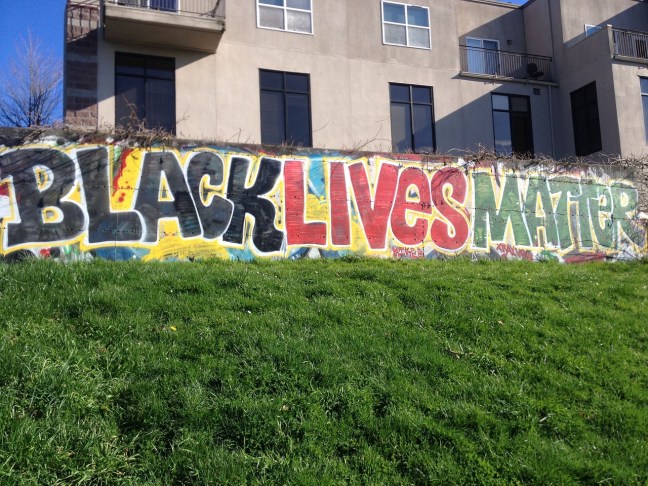
We stand in solidarity with Black Lives Matter and every other group and individual who share that belief and have been exercising their First Amendment rights to proclaim it. The mass protests throughout the United States and around the world over the past week give voice to the anger and anguish of those whose cries for justice have gone unanswered for far too long. In a few instances, remarkably few given the provocations, both recent and historical, understandable frustration has boiled over into violence and property damage.

For the most part, people have stood, knelt and marched peacefully, keeping their eyes on the prize and demanding justice. In a number of instances, including some here in New Jersey, police have joined with protesters, marching and even kneeling alongside them. In too many places, however, most notably Washington D.C., in the shadow of the White House, protesters have been met with tear gas, rubber bullets, flash grenades and other forms of police violence, which we condemn as strongly as we do the murder of George Floyd. It is not only an egregious violation of the rights of the protesters but a betrayal of our values as a nation and a stain upon our country.

In our home city of Newark, NJ, where the beating of a black taxi driver by police in the summer of 1967, sparked four days of riots that left 26 people dead and hundreds injured, the past was not prelude. That was, at least in part, thanks to Mayor Ras Baraka who called a press conference on the steps of City Hall to express support for the protest, marched in the front lines and spoke before the crowd about his own experiences as a youth protesting the deaths of black people at the hands of police. The City’s top police officials likewise voiced support and denounced police brutality and the “senseless murder” of Floyd.  Much credit also goes to the organizers, People’s Organization for Progress, and its long-time leader, Larry Hamm.

For our own part, NJ Appleseed will continue to be part of the long-term, big-picture solution as we work to change institutional structures and public policies in areas that disproportionately impact low-income communities of color, including affordable health care, voting rights, community and environmental infrastructure and preserving public ownership or access to essential resources like water systems and hospitals.

Now is the time to move forward and demand structural change; we cannot return to the pre-Trump status quo.  The United States must face the ravages wrought by capitalism, and work toward establishing a just social and political order.


PLANewark Projects

20-26 Bruen Street

2014

Application Reference: ZBA 7-14-C

The proposal for a surface parking lot on Bruen Street brought the community together to form PLANewark (under a different name at the time) and has driven much of our work since. The area around Penn Station has long been dominated by commuter parking lots and has been steadily growing for decades. In 2014, members of the neighborhood opposed the creation of yet another parking lot on a property where a building had to be demolished to make way. Expert testimony was given against the lot, and the Zoning Board decided the negative impacts vastly outweighed the positive contribution the lot would have had in the neighborhood. This represented the first time citizens of Newark successfully opposed the creation of a parking lot. PLANewark members advocated in favor of dense, mixed-use development and won.

Click here to learn more about this project.

Washington Street Lot

2015-Present

Application Reference: ZBA 15-66

12888737_1582024888778593_3977613012199999839_o

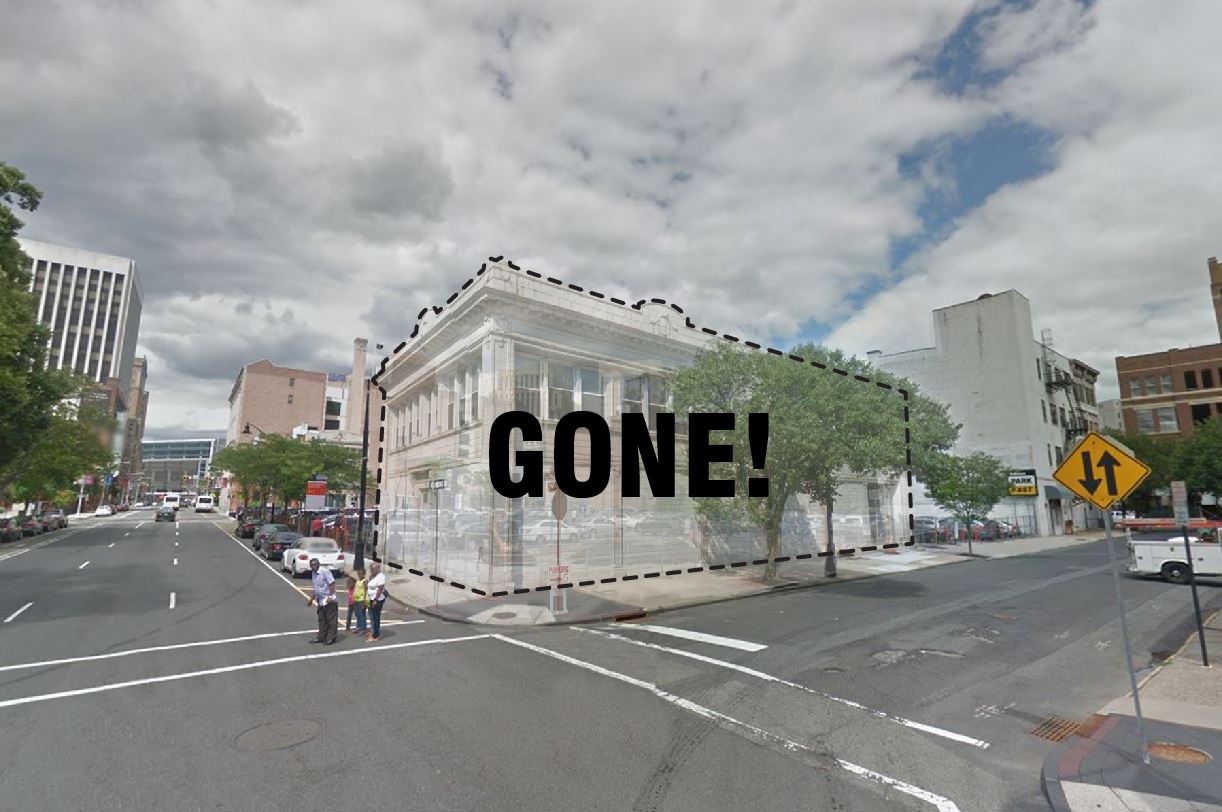
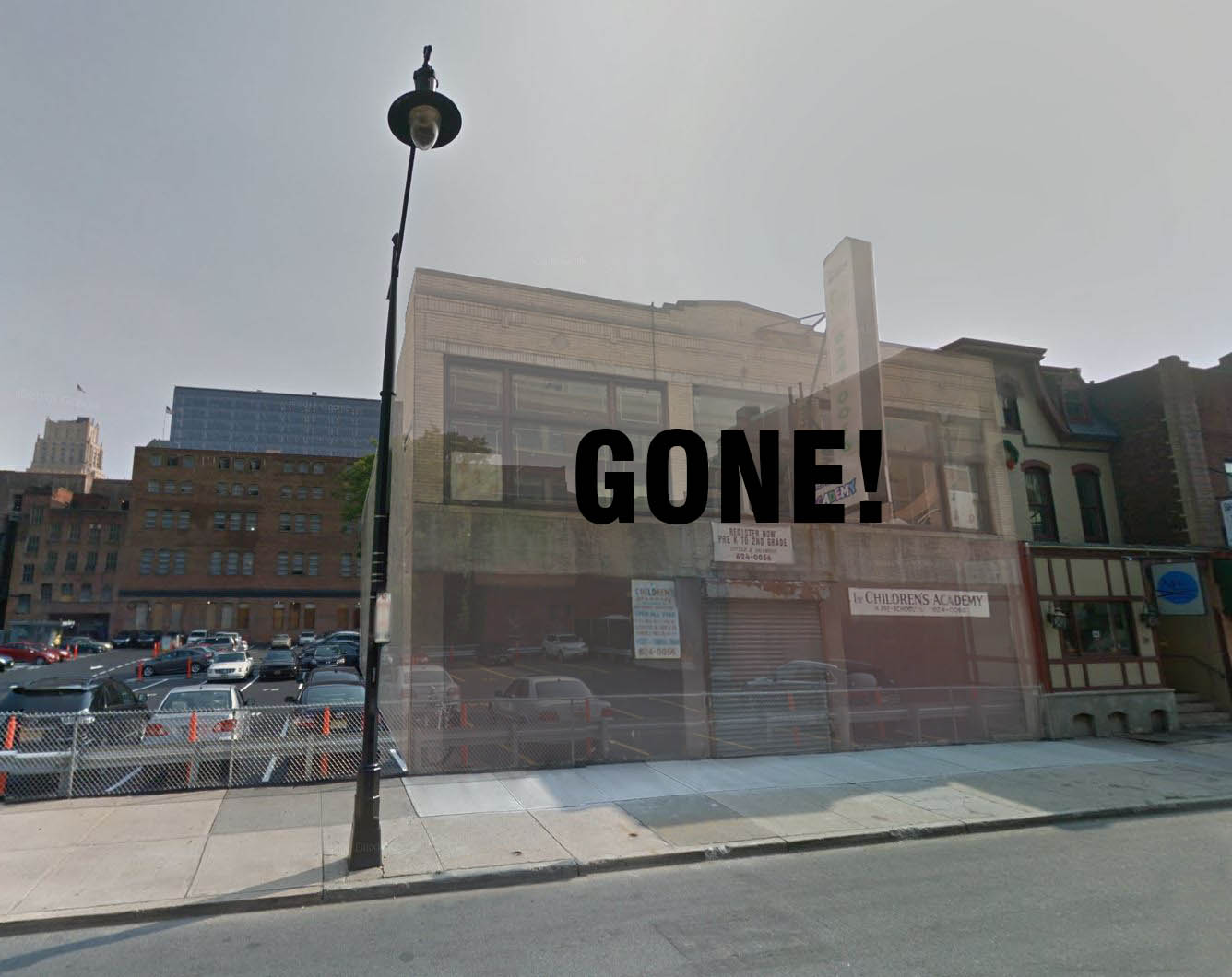
Edison Properties owns and operates a large parking lot at the corner of Washington Street and Central Ave in the heart of downtown Newark. In the summer of 2015, the company proposed an expansion of that lot to take the place of a former terracotta building with contributing historic character. PLANewark opposed this action because surface parking lots are not permitted anywhere downtown and because of the loss of character in the James Street Historic Commons. Instead of a long battle with Edison, we forged an agreement with two important outcomes:

  1. Edison agreed to vast improvements to the original design including planted buffers around the perimeter, less obtrusive signage, bicycle parking stands, electric car charging stations, and more. These non-standard features have helped to improve the visual appearance of the lot and contribute some small public benefits.
  2. Edison agreed to enter a development process in which several options will be evaluated to redevelop the lot with a large, mixed-use building. If at the end of this process, redevelopment is financially feasible, PLANewark will be advocating for the kind of development that will bring tangible public benefits to the neighborhood.

Click here to read the development agreement between Edison Properties and PLANewark.

Central Avenue Lot

2015-2016

Application Reference: ZBA 15-65

Central Ave Ghost

Similar to the Washington Street Lot, PLANewark entered an agreement with Edison Properties in order to bring public benefits into the plans for a surface parking lot expansion. This expansion also was taking the place of an existing building which was demolished under questionable circumstances. We were not able to win a redevelopment agreement for this lot, but we were able to secure several improvements that contribute to the neighborhood including planted buffers around the perimeter, less obtrusive signage, bicycle parking stands, electric car charging stations, and more.

Click here to read the agreement between PLANewark and Edison Properties.

Family Dollar

2015-2016

Application Reference: CPB 15-38, CPB 16-03

Members of PLANewark worked with the Broad Street Neighborhood Association (BSNA) and others to protest the development of a suburban-style Family Dollar store in the Lower Broadway neighborhood of Newark. When the application was heard by the Central Planning Board, residents used their knowledge of the application, the Newark Master Plan, and the recently adopted zoning regulations (NZLUR) to present arguments against the development. Based on the persistence of BSNA and some technical assistance from PLANewark, the applicant was denied twice by the Planning Board. While  this does stall development on the lot in the short term, it does retain the possibility that the Master Plan will be fully realized along this main artery of Lower Broadway. The neighborhood group and the owner of the property have already begun talks to transform the vacant lot and small garage into mixed-use development that will benefit everyone.

28-50 McWhorter Street

2013-Present

Application Reference: ZBA 16-73, ZBA 17-26, CPB 18-15

J&L Parking Lots has slowly amassed dozens of acres of surface parking lots in downtown Newark. Although the company has started to develop some of their lots, it is only the ones furthest away from the heart of the neighborhood that are getting attention. Starting in 2013 and continuing to this day, we have fought against this parking lot between the Ironbound neighborhood and Penn Station which has stifled development in the area. Members of PLANewark appealed the original Zoning Board approval and won at the State of New Jersey Supreme Court of Appeals. Now, the company operates the parking lot illegally.

Taco Bell

2017-2018
Application Reference: ZBA 16-61, CPB 17-21

Residents of the Lower Broadway Neighborhood Association and the Historic 8th Avenue Association reached out to PLANewark about an application for a standalone drive-thru restaurant at the “gateway” between Downtown and Lower Broadway. PLANewark and local residents presented arguments against the project which is inconsistent with the Broad Street Station Redevelopment Plan and exacerbates the problems with fast-food and auto-oriented businesses within a transit-rich, residential neighborhood. In January 2017, the Zoning Board of Adjustment denied the application. However, Muy Brands re-applied and was granted approval from the Central Planning Board in July of 2017, despite the application being almost identical. The Taco Bell completed construction in 2018 and will remain for some time as a reminder of the deficiencies in the planning and development process.

Newark Guide to Planning for Residents

2019

PLANewark is working on a booklet entitled “Newark: A conversation on change in our city.” This booklet is meant to be an introduction to planning and development issues in our city and explain what these issues mean for everyday life. Presented as a series of questions and answers, this booklet provides a pathway to learning about and participating in the planning process that is accessible to all Newark residents.

Parking Day

2015-Present

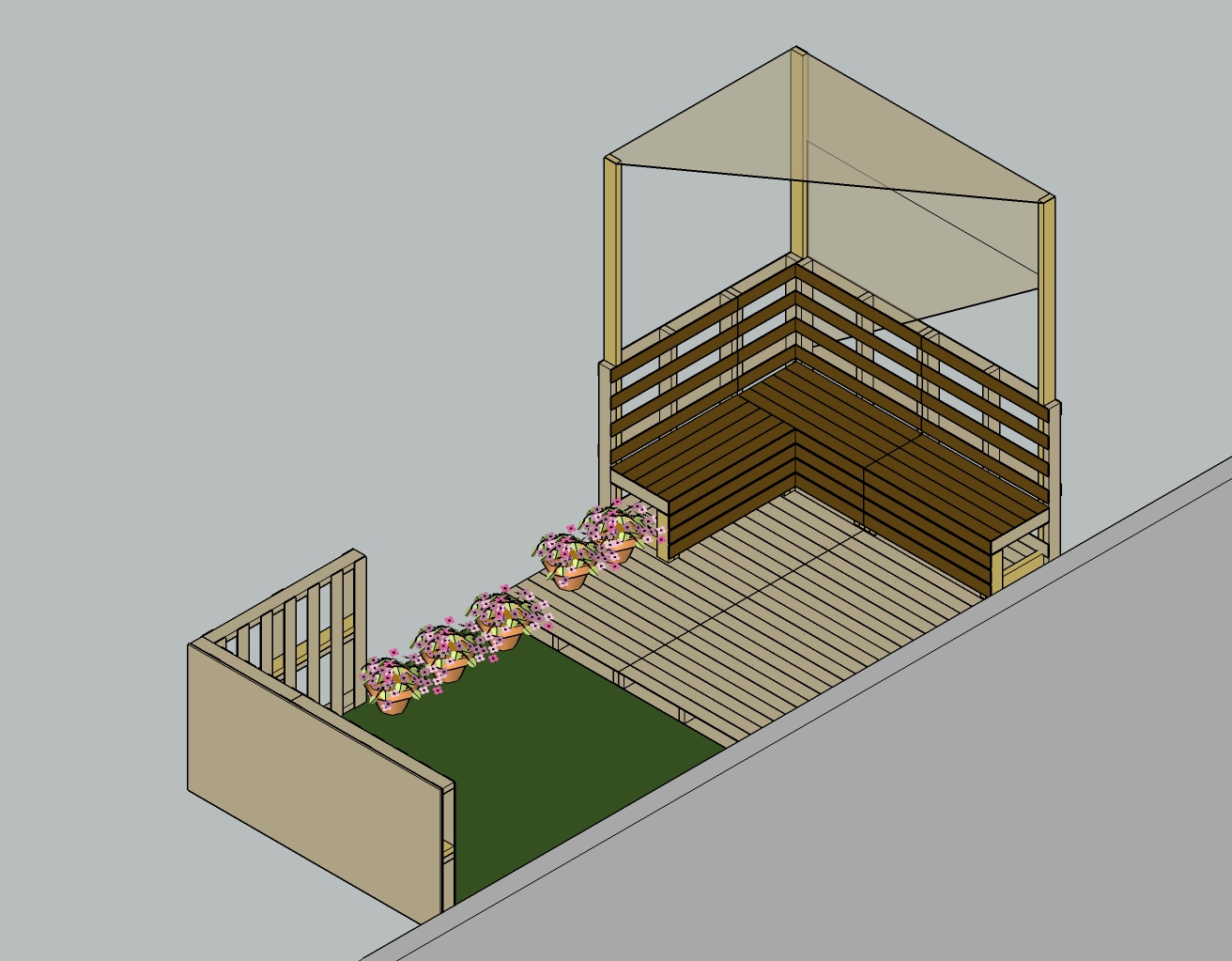
PARK(ing) Day is an annual worldwide event that takes place on the third Friday of September where artists, designers and citizens transform parking spots into temporary public parks. In 2016, PLANewark participated in this event by occupying parking spot with a pop-up public parklet on Newark’s Halsey Street shopping corridor.

To learn more about what PARK(ing) Day is, click here.

Old Essex County Jail Project

2019

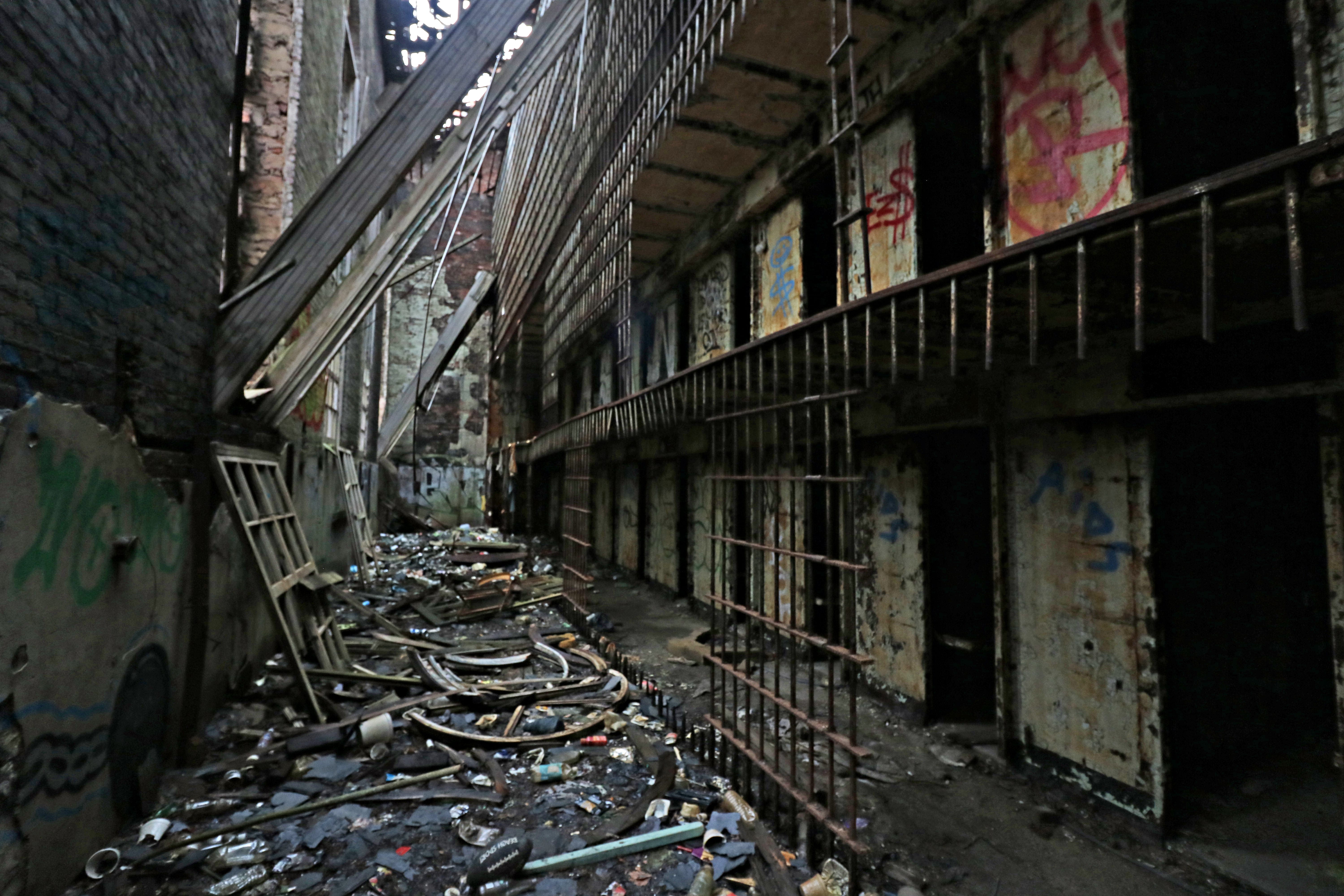
North-Wing-3-Madeline-Berry-1ceha0t-1xhuslf
Credit: Madeline Berry

PLANewark is a proud sponsor of an exhibit on the old Essex County Jail. In part, this project documents and displays the work of Columbia GSAPP students from 2018. A website has been created to display the history, current state, and future reuse proposals for this historic site.