Murphy’s Law: The Campaign Finance Reform That Wasn’t

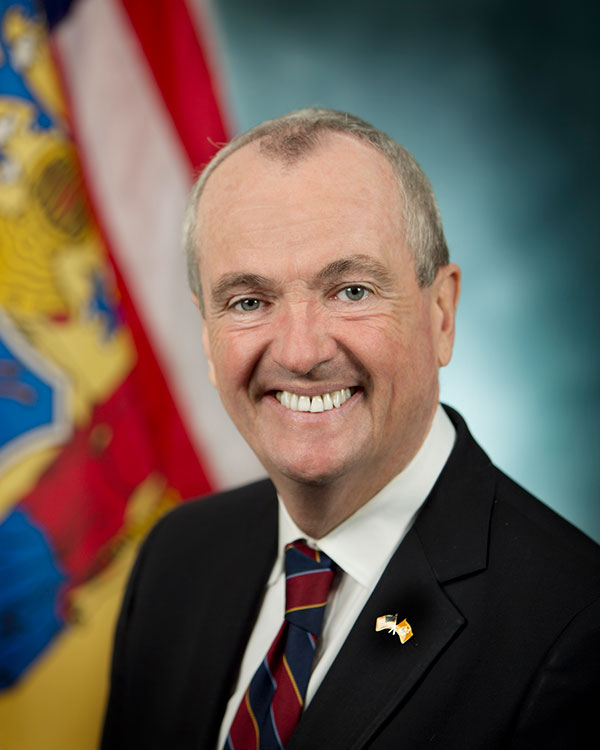
On April 3, Governor Murphy signed into law the Elections Transparency Act, just four days after the Legislature approved it. He did so with no fanfare, which was fitting for the shameful piece of legislation it is.  As Matt Friedman wrote for Politico, “Nobody wants to own the Elections Transparency Act.”  Murphy held no press conference and issued no statement about the bill becoming law, nor did any of its legislative sponsors. But the newspapers weighed in and they were scathing. The New York Times headline that day read “Gov. Murphy Signs Law Decried as Frontal Assault’ on Good Government,” while an op-ed in the next day’s Bergen Record ran under the caption “Phil Murphy just upended a national ‘model’ for regulating campaign finance.”

The timing was a bit ironic. Just one day before the first former president ever to be charged with a crime was to be arraigned in nearby NYC on charges having to do with violations of campaign finance law, the governor of the state next door was taking an axe to its own ability to rein in campaign finance abuses.  Contrary to what the name Elections Transparency Act suggests and however good the original intention behind the law might have been, most of it has nothing to do with promoting transparency. Instead, the law is far more likely to boost the power of big money in New Jersey politics, allowing it to drown out the voices and values of voters, thus undermining our democracy.

The new law does this in a variety of ways, including doubling contribution limits, authorizing additional monies for slush funds (so-called “housekeeping accounts” to pay for administrative expenses) on top of that, and eliminating local pay-to-play laws, while loosening the already lax state-wide standard. It also hamstrings the Election Law Enforcement Commission (ELEC), the hitherto highly effective agency whose job it is to enforce the laws governing the funding of political campaigns in New Jersey. Not only does the law destroy the independence of ELEC by giving the Governor (one time only) unchecked authority to fire and replace all of its commissioners without the usual advice and consent of the Senate, but it drastically curtails the amount of time allowed for ELEC to investigate violations of the law.  Even worse, it makes the latter change retroactive, seemingly (and conveniently) tossing out three pending complaints against statewide Democratic fundraising committees along with about 80% of ELEC’s entire docket of pending matters.

The proponents of the legislation, which passed along almost strictly party lines—only four Dems in both houses voted “no” (Senator Nia Gill and Assembly members Dan Benson, John McKeon and Cleopatra Tucker), only six Republicans approved it (Senators Christopher Connors and Vincent Polistina and Assembly members Dianne Gove, Donald Guardian, Kevin Rooney and Brandon Umba) and an initial Republican sponsor, Senator Steven Oroho, took his name off the bill — tended to justify the legislation based on the disclosure  provisions.  Those provisions are good as far as they go, but any good they accomplish is far outweighed by more problematic aspects of the legislation.

Following the U.S. Supreme Court’s 2010 decision in Citizens United v. FEC, which reversed longstanding campaign finance restrictions and enabled corporations and other outside groups to spend unlimited amounts on elections, huge amounts of dark money have flowed through those so-called “dark money groups,” which need not disclose their donors, and been used to influence elections. Under the new law, donors above a certain threshold will have to be disclosed and the law’s supporters argue that, combined with the increase in campaign contribution limits, that will shift political giving back to candidates and campaigns, who are required to operate more openly. 

Here is a closer look at what the Elections Transparency Act (ETA) does. First, with regard to transparency, it requires independent expenditure committees — nonprofit and political groups not tied to a particular candidate, the source of so-called “dark money” — to report to ELEC campaign contributions in excess of $7,500 and all expenditures regardless of amount. A last-minute amendment expanded the definition of “independent expenditure committee” beyond 501(c)(4) nonprofit social welfare organizations such as NOW, ACLU, NRA, and the Sierra Club, to also encompass 501(c)(6) groups, defined by federal tax law as “Business leagues, chambers of commerce, real-estate boards, boards of trade, or professional football leagues . . . ,  not organized for profit and no part of the net earnings of which inures to the benefit of any private shareholder or individual.”  The bill also establishes a cumulative reporting requirement for independent expenditure committees.

Further, it requires candidates and political committees to report campaign contributions greater than $200, down from $300 under prior law, and all expenditures, regardless of amount. There is also a change from 48 hours to 72 hours in the deadlines for reporting certain contributions and expenditures made within a certain period of time before an election though all must be reported within 24 hours in the week prior to election.

That is pretty much it for the transparency/reporting provisions and it is not even clear that those would survive a constitutional challenge. Very similar language in a law enacted in 2018 was struck down by a federal court the following year in Americans for Prosperity v. Grewal, on the ground that it violated the First Amendment.  When ELEC Executive Director Jeffrey Brindle testified before the Senate Judiciary Committee on February 23 in support of some aspects of the bill, he cautioned that the disclosure requirements for independent expenditure groups need to be “narrowly tailored” to electioneering activity to ensure that the ETA would be constitutional, unlike the 2018 measure. That was not done.

Continue reading Murphy’s Law: The Campaign Finance Reform That Wasn’t

GOVERNMENT TRANSPARENCY MEASURES DIE AGAIN

Two pieces of legislation that would bolster government transparency were killed off on November 15 when they failed to win approval from a Senate Committee. The bills, S-379 and S-380, would have strengthened the Open Public Meetings Act (OPMA) and the Open Public Records Act (OPRA), to make government meetings and records more accessible to the public.

Both measures were killed off in the Senate’s State Government Committee, which has five members and thus requires three votes in favor for a bill to advance.  On each bill, the two Republicans, Samuel Thompson and Vincent Polistina, went first and voted “no.”  They were followed by Senator Linda Greenstein, a Democrat who was substituting for Committee Vice-Chair Dawn Addiego but did not even show up, instead leaving word that she abstained on both bills. With no hope of three ‘Yes” votes, the other two Democrats on the Committee, Chairman James Beach and Shirley Turner, did not have to cast a vote either way on the bills. Following mention of Greenstein’s abstention on S-379, Beach reacted “so the bill does not come out of committee.” And on S-380, he said “Therefore, it does not come out of committee.”

It seemed a cowardly way to kill the legislation, with no Democrat having to go on record as opposed to greater transparency, while stopping the bills in their tracks and probably for the foreseeable future, given the imminent retirement of primary sponsor Loretta Weinberg.

The bills, in some form, have been kicking around the Legislature for more than a decade.  As far back as 2010, Weinberg introduced S-1351 (OPMA) and S-1352 (OPRA), and some version of them has been introduced in every session since then.

I wrote about an earlier version of Weinberg’s OPRA bill on this blog in 2017. Joining her as a cosponsor of S-1046 was Republican Joseph Pennacchio. In the Assembly, Democrat Gordon Johnson and Republican Erik Peterson cosponsored counterpart bill, A-2697. On that go-round, after sitting more than 16 months in the Senate State Government committee (where open government bills apparently go to die), S-1046 was transferred to the Senate Budget and Appropriations Committee which reported it out of committee in June 2017 without recommendation. The vote was 7 in favor, 1 against and 5 abstentions. Notably, the abstainers included Greenstein (her m.o.?) and fellow Democrat Patrick Diegnan, along with Republicans Anthony Bucco, Samuel Thompson and Jennifer beck, while the lone “no”  vote came from Jeff Van Drew, back when he was a Democrat, while the “yeses” included two Republicans, Steven Oroho and Kevin  O’Toole.

In all of the six legislative sessions, including this one, in which the bills have been introduced, neither has ever made it to a floor vote. Weinberg persisted, repeatedly reintroducing the bills and negotiating with the stakeholders –municipalities, school boards, county clerks, etc. – in an effort to craft a workable resolution, but to no avail. And soon she will be gone.

If Weinberg, an experienced, influential and popular lawmaker who during her last few years served as Senate Majority leader, the second most powerful position in the Senate, could not get these long-overdue transparency reforms passed during her tenure, it is hard to imagine how it will get done after she leaves.

The only person to testify regarding the bills on Nov. 15 was John Burns, Senior Legislative Counsel for the NJ School Boards Association, whose members are subject to OPMA and OPRA. Burns told the committee that he had not seen the latest draft of either bill and regarding S-380, the OPRA bill, could not support it because of its attorney fees provision.

The legislation would have furthered government transparency in multiple ways listed below. Read through the list and ask yourself why your legislators have been unable and/or unwilling to pass this legislation.

Among other improvements, the OPMA bill, S-379, would have:

Continue reading GOVERNMENT TRANSPARENCY MEASURES DIE AGAIN

Water Agency Whistleblower Group Has Lingering Questions re Booker Role in Scandal

On January 7, 2021, former Newark police officer Janell Robinson was sentenced to nine years in federal prison for her role in a massive fraud and kickback scheme that sent half a dozen others to jail and took down the Newark Watershed Conservation & Development Corporation (“NWCDC”), the quasi-public entity that managed Newark’s reservoirs and ran its water treatment plant.

The corruption was unearthed by the Newark Water Group in its efforts to prevent Newark from privatizing its water system.

Starting in 2012, New Jersey Appleseed represented the Water Group members, who formed a Committee of Petitioners to pursue the Initiative and Referendum (I&R) process, by which they sought to have the City Council pass an ordinance blocking privatization or submit the issue to the voters. After the City Council adopted the proposed ordinance and Mayor Cory Booker responded by suing the Council and the Committee, NJ Appleseed defended the Committee and assisted the subsequent effort to bring to justice those responsible for the corruption and help shepherd the NWCDC through receivership and bankruptcy.

The NWCDC is long gone, its duties assumed by the Newark Water & Sewer Department, and everyone else convicted in the scandal was sentenced years ago, with two of them currently serving lengthy federal prison terms. Robinson’s case took longer because she went to trial rather than pleading guilty like the others. Her sentencing would seem to signal a final closing of the book on this sordid tale but it does not. There remain too many unanswered questions that are set forth in the following statement issued by the Newark Water Group in response to the sentencing.

Many of the questions concern Cory Booker who was the Chairman of the NWCDC Board of Directors but never attended a single meeting.

Continue reading Water Agency Whistleblower Group Has Lingering Questions re Booker Role in Scandal

LITTLE COOPERATION WITH ICE IN NJ OTHER THAN ESSEX COUNTY

A recent report on the extent to which state, county and local law enforcement agencies in New Jersey have been cooperating with federal immigration authorities has not received much attention so I am shining a light on it.

What I find particularly striking and upsetting is what it shows about the jail in Essex County, where I live. There are more instances of Essex County Corrections working with Immigrations and Customs Enforcement (ICE) than in all other 20 counties combined. Essex County has even collaborated more than the state Department of Corrections and thus the entire state prison system. 

Continue reading LITTLE COOPERATION WITH ICE IN NJ OTHER THAN ESSEX COUNTY

WHY YOU SHOULD VOTE “NO” ON BALLOT QUESTION 3

A little more than a month from now, New Jersey voters will start receiving their mail-in ballots for November’s general election. In addition to all the candidates running for office, those ballots will contain three statewide questions on which voters will also get to decide.

You have probably heard a lot about Ballot Question No. 1, whether or not to legalize marijuana.

Ballot Question 2 would extend an existing $250 property tax deduction for veterans who served in time of war to those who served in peacetime as well. It follows a ballot question from last year that extended the same deduction to retirement communities that house veterans, which were required to pass the value of the deduction on to the veterans.

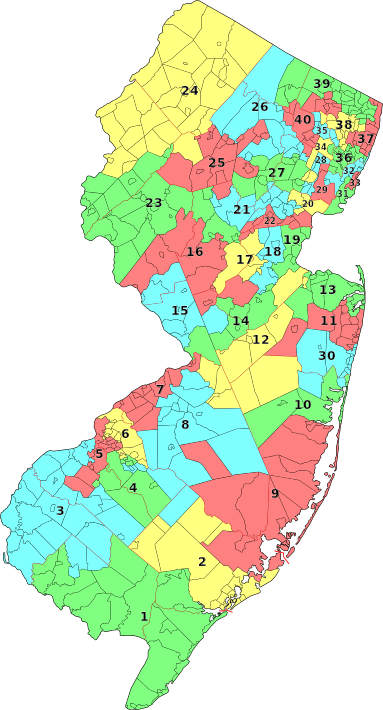
I am here to talk about the third question, which is a bit more complicated and has not received much attention: a proposed amendment to the New Jersey constitutional provisions that govern redistricting, the process by which state legislative maps are redrawn every 10 years based on updated Census data. Continue reading WHY YOU SHOULD VOTE “NO” ON BALLOT QUESTION 3

Appleseed Network Applauds Thursday’s Supreme Court Decision Upholding DACA

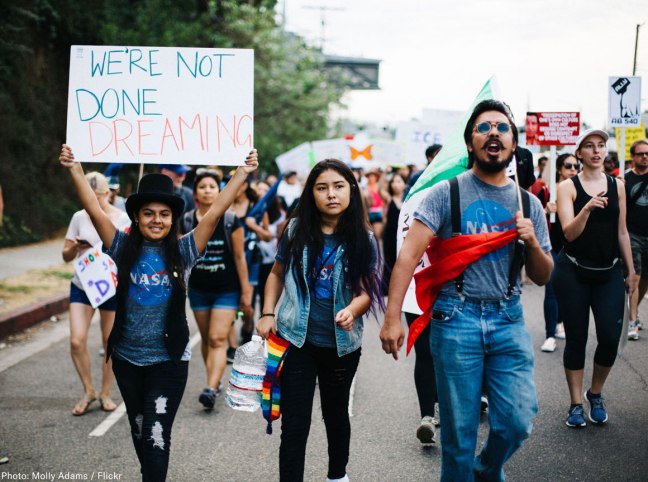
The Appleseed Network celebrates the Supreme Court’s 5-4 ruling on Thursday morning, June 18th, in favor of blocking the termination of the Deferred Action for Childhood Arrivals (DACA) program. The Court found that the Trump administration’s September 2017 move to terminate the program was “arbitrary and capricious,” and that the impact of the program’s termination on DACA recipients – at least 650,000 young immigrants brought to the US as children – was not properly taken into account.

DACA is a program initially announced in 2012 by former President Barack Obama that allows undocumented young people across the country to harness their skills and education to work and contribute to their communities. Dreamers (those protected under DACA) are able to enroll in college, obtain driver’s licenses, and continue their careers in the place they know as home. Under President Trump’s termination of DACA, new applications to the program were no longer accepted. Thursday morning, the Court’s positive ruling reaffirmed that DACA recipients will continue to be able to live in the US without fear of deportation, as well as pursue higher education and gainful employment.

DACA recipients are highly involved in communities throughout the US, practice political and civic engagement, and have been woven into the economic fabric of America. The Center for American Progress reported that DACA recipients and their households contribute $5.7 billion in federal taxes and $3.1 billion in state and local taxes annually. Additionally, according to the Migration Policy Institute, “55% of DACA recipients are employed, amounting to 382,000 workers [and] 62% of those not in the labor force are enrolled in school.” During the current COVID-19 crisis – which has taken the lives of at least 120,000 people in the US – it is crucial that we acknowledge the 29,000 Dreamers who are working as health care workers and home care providers on the frontlines, and the more than 150,000 Dreamers who are essential workers providing education, growing and producing food, and keeping shelves stocked. Appleseed works to promote equity, security, and justice for children and families across the US and Mexico, and we applaud the DACA program as both a pathway for young undocumented immigrants to achieve their educational and economic goals as well as a recognition of immigrants’ inherent human rights, no matter their citizenship status.

While the ruling is a huge win for immigrants and immigration justice activists around the nation, it is only the first step in securing permanent protections for Dreamers. The American Dream and Promise Act of 2019, passed by the House of Representatives in Spring of 2019, would provide these protections and create a pathway to citizenship for DACA recipients. We urge the Senate to pass this bill in order to recognize the right of Dreamers to live free of fear and to pursue their dreams on American soil.

The Appleseed Network stands in solidarity with immigrants when we say, #HomeisHere.

NJ Appleseed Statement on the Murder of George Floyd and the Ensuing Unrest

We condemn in the strongest terms the murder of George Floyd, who was suffocated to death last week by a Minneapolis police officer who pressed his knee against Floyd’s neck for nearly nine minutes while he gasped for breath and pleaded for mercy, as well as the recent killings of Ahmaud Arbery, chased and shot by vigilantes in Georgia for jogging while black, and Breonna Taylor,  shot by police in her own Louisville home. The list of people of color who have been wrongfully killed, mainly by police who typically do so with impunity, goes on and on and it has to stop.

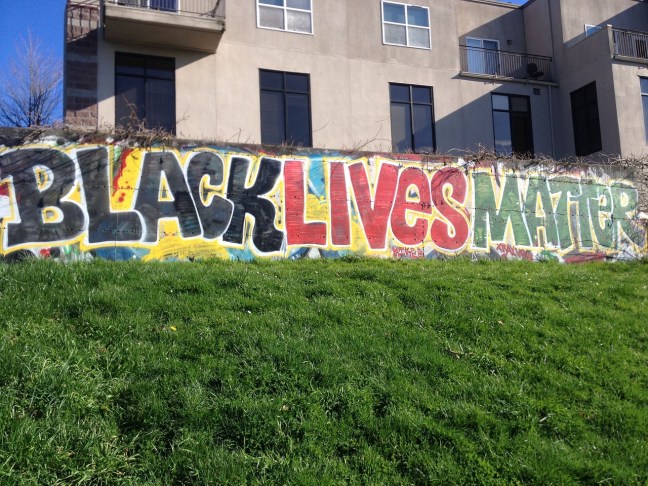
We stand in solidarity with Black Lives Matter and every other group and individual who share that belief and have been exercising their First Amendment rights to proclaim it. The mass protests throughout the United States and around the world over the past week give voice to the anger and anguish of those whose cries for justice have gone unanswered for far too long. In a few instances, remarkably few given the provocations, both recent and historical, understandable frustration has boiled over into violence and property damage.

For the most part, people have stood, knelt and marched peacefully, keeping their eyes on the prize and demanding justice. In a number of instances, including some here in New Jersey, police have joined with protesters, marching and even kneeling alongside them. In too many places, however, most notably Washington D.C., in the shadow of the White House, protesters have been met with tear gas, rubber bullets, flash grenades and other forms of police violence, which we condemn as strongly as we do the murder of George Floyd. It is not only an egregious violation of the rights of the protesters but a betrayal of our values as a nation and a stain upon our country.

In our home city of Newark, NJ, where the beating of a black taxi driver by police in the summer of 1967, sparked four days of riots that left 26 people dead and hundreds injured, the past was not prelude. That was, at least in part, thanks to Mayor Ras Baraka who called a press conference on the steps of City Hall to express support for the protest, marched in the front lines and spoke before the crowd about his own experiences as a youth protesting the deaths of black people at the hands of police. The City’s top police officials likewise voiced support and denounced police brutality and the “senseless murder” of Floyd.  Much credit also goes to the organizers, People’s Organization for Progress, and its long-time leader, Larry Hamm.

For our own part, NJ Appleseed will continue to be part of the long-term, big-picture solution as we work to change institutional structures and public policies in areas that disproportionately impact low-income communities of color, including affordable health care, voting rights, community and environmental infrastructure and preserving public ownership or access to essential resources like water systems and hospitals.

Now is the time to move forward and demand structural change; we cannot return to the pre-Trump status quo.  The United States must face the ravages wrought by capitalism, and work toward establishing a just social and political order.


NJ NEEDS SAFER VOTING MACHINES

NJ Appleseed has been working for many years to protect the integrity of the voting process and continues to do so.

It played a key role in the passage of a 2008 bill requiring that election results be audited to insure that they are correct. That law has never been implemented because audits require paper ballots and until 2019, all but one county in NJ used purely digital paperless voting machines.

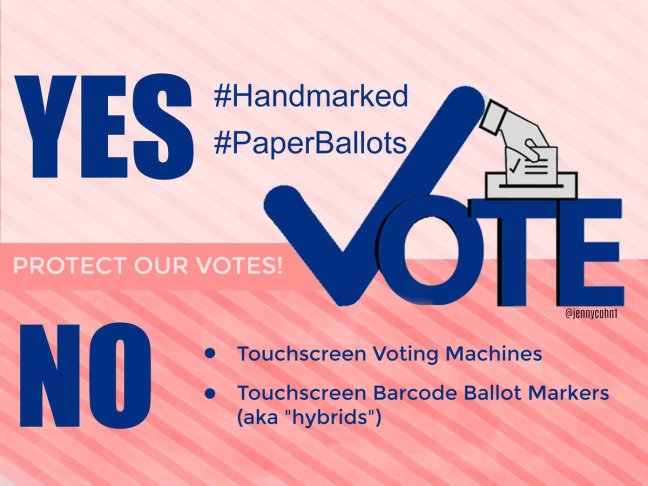
More recently, NJ Appleseed has supported replacing those digital machines with a system that voting security experts tells us in the most secure: auditable paper ballots that are hand-marked by the voter, rather than the machine, and read by optical scanners, to reduce the risk of tampering.

NJ Appleseed was part of a campaign in Essex County, led by the grass roots group SOMa Action (from South Orange and Maplewood), that recently succeeded when the Freeholders voted in January to approve the purchase of such a system, the first in New Jersey. It will be in place for the 2020 primary and general election.

The next step will be to try to persuade other counties to do the same.  Here is my op-ed  on the subject, which was recently published in the Star Ledger and posted on its website.

Remembering David Perry Davis

I was greatly saddened to learn a few weeks ago that David Perry Davis died unexpectedly on October 3, at the age of 55.

David was a passionate and principled advocate who, probably more than any other individual, improved the quality of justice in the New Jersey court system for poor people who fall behind on child support.

In addition to the countless clients and colleagues whose lives he touched and improved through his practice as a family lawyer, David won two landmark court decisions that protect parents who owe child support from being locked up or barred from driving just because they cannot afford to pay. Continue reading Remembering David Perry Davis

RULING ALLOWS ELECTOR DISCRETION BUT MIGHT IMPEDE EFFORT TO CIRCUMVENT ELECTORAL COLLEGE

Donald Trump won the Presidency in 2016 despite being trounced by Hillary Clinton in the popular vote.

Thanks to the Electoral College, the profoundly undemocratic body that actually elects our Presidents and Vice-Presidents, Trump’s slight margin of victory in a few key states outweighed the millions more votes cast nationwide by those who preferred Clinton.

The Electoral College has been enshrined in our system from the start, in Article II, section 1, paragraph 3 of the Constitution. It was modified in 1804, with ratification of the Twelfth Amendment, which requires separate votes for President and Vice-President.

Most years, the results of the Electoral College vote match up with the popular vote.  But after 2016, when it thwarted the will of the people for the second time in 16 years (and for two of our last three Presidents), many people realized that we must do something about it if we want to make sure that the person who wins the most votes is the one who becomes President. Continue reading RULING ALLOWS ELECTOR DISCRETION BUT MIGHT IMPEDE EFFORT TO CIRCUMVENT ELECTORAL COLLEGE